Creatives
We built 57 clinic ads.
43 of them did not clear our check.
Concept work for clinics that do not exist, across three regulated professions. Every piece went through SameDay’s own internal review, the same one a clinic’s work goes through before it is published. 14 cleared it. The other 43 are on this page too, each one under the rule that stopped it.
Read this first
Every clinic on this page is invented
- Northline, Kauri, Axis, Meridian, Pivot and Keel in chiropractic. Fantail, Parallel, Vero and Harbourline in dental. Vessel, Apricity, Lumen and Velva in medical aesthetics. All fourteen are concept brands built by SameDay. None of them are clients, none of this was ever run, and no result is claimed for any of it.
- The check behind the two piles is SameDay's own. No regulator, professional board or advertising platform reviewed any of this work, and no New Zealand regulator pre-approves general advertising in any case. Cleared means it cleared our internal review, and nothing more.
- 43 of the pieces here did not clear that review. They are published only so the finding underneath each one can be read against the artwork it describes. They are examples of what SameDay does not run, and none of them is a template to copy.
- The web addresses in the artwork are invented too. They are not the address of any clinic and they are not intended to point anywhere.
- Every person shown is AI-generated, not photographed. There are no patients and no practitioners here, real or represented.
- Six images carry a painted-in black block. Five of them had a suburb, a city or a phone number rendered into the artwork. Publishing an address for a clinic that does not exist is a misrepresentation, and a fabricated New Zealand phone number belongs to somebody, so the block stays on. The sixth had a real footwear brand's logo on a shoe.
- The rule summaries on this page are SameDay's own reading of the published standards, current at August 2026 and due for re-reading by 20 October 2026. They are not legal advice and they do not replace a clinic's own sign-off.
Chiropractic
Advertise the assessment, never a result.
The researched vertical, and the one SameDay has read end to end. The Chiropractic Board standard bars altered before-and-after images and any advertising that promises an outcome, which takes before-and-after off the table in practice. It also bars patient testimonials in any form, which is stricter than the ASA code and is why none appear anywhere on this page. We treat a symptom drawn on a body as a diagnosis made in an ad. What we build on is the appointment and what it covers.
Concept work for an invented clinic. Never run, no result claimed.
On the wall
2 cleared our check
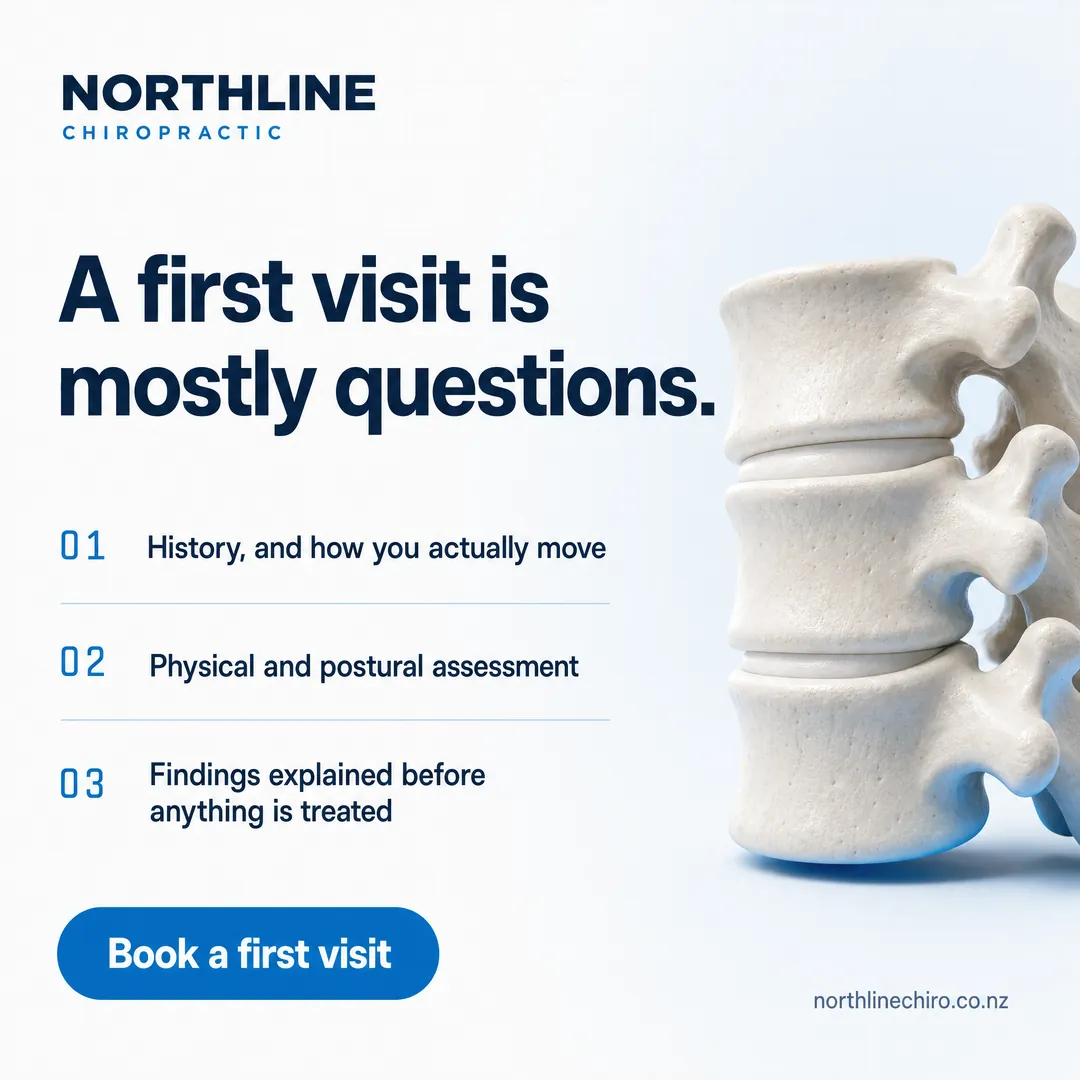
C-03Concept
Northline Chiropractic
What the first visit actually is

C-17Concept
Meridian Spine
Assessment first, imaging only where indicated
Held back
22 flagged
These fail in three ways, and most tiles fail in more than one. The largest group is the failure the Board standard is written against: a symptom drawn onto a body, or a promise about what the care will do to it. Behind that, and often on the same tile, is a claim with nothing behind it. The rest fail on things a designer controls rather than a clinician. A mark on a shoe. A spine that does not line up with the back it is drawn in.
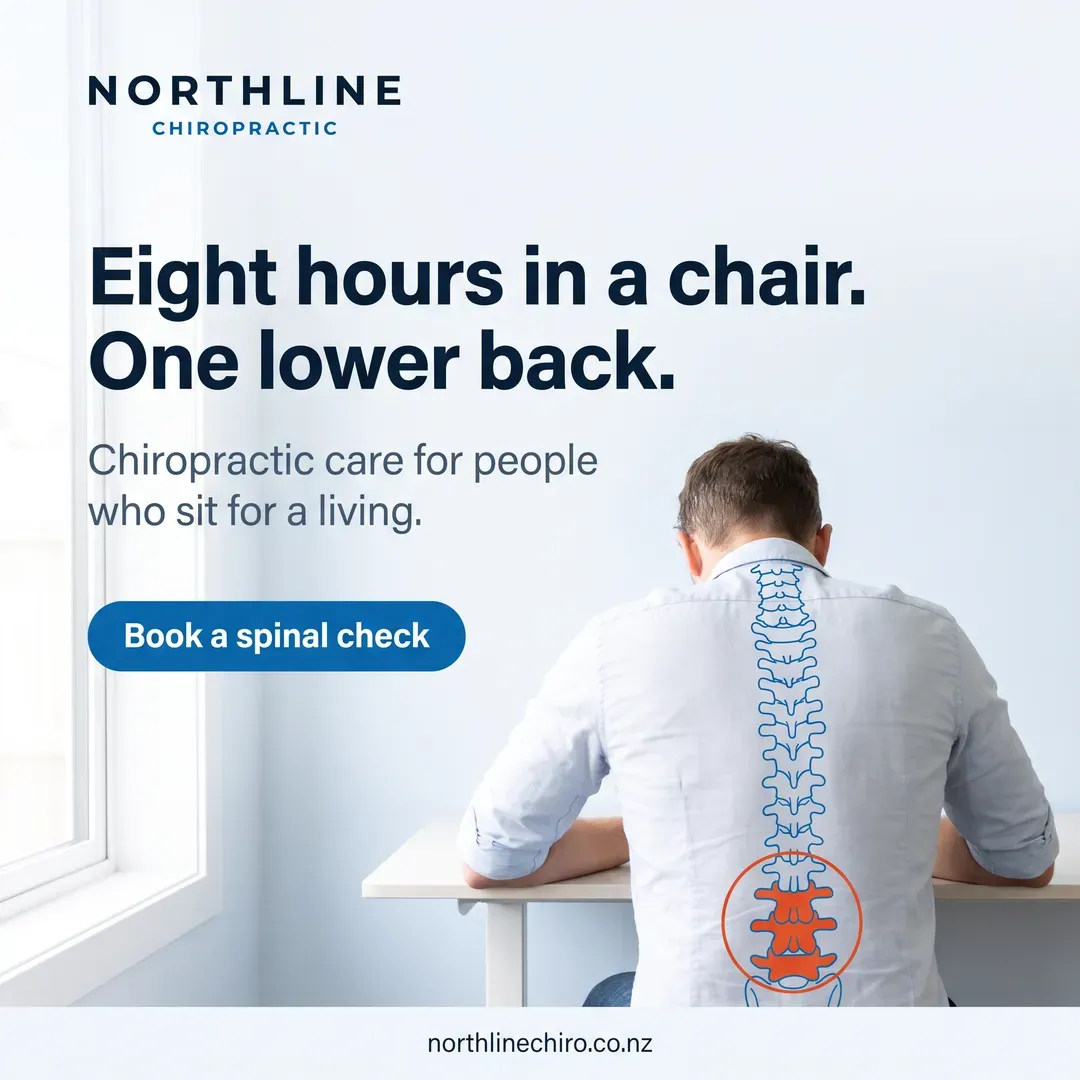
C-01Concept, held
Northline Chiropractic
- Diagnosis in an ad
- Unsourced claim
Two vertebrae are filled solid orange on a photographed back, which is an assessment finding drawn into an ad. The domain baked into the artwork has not been cleared either.
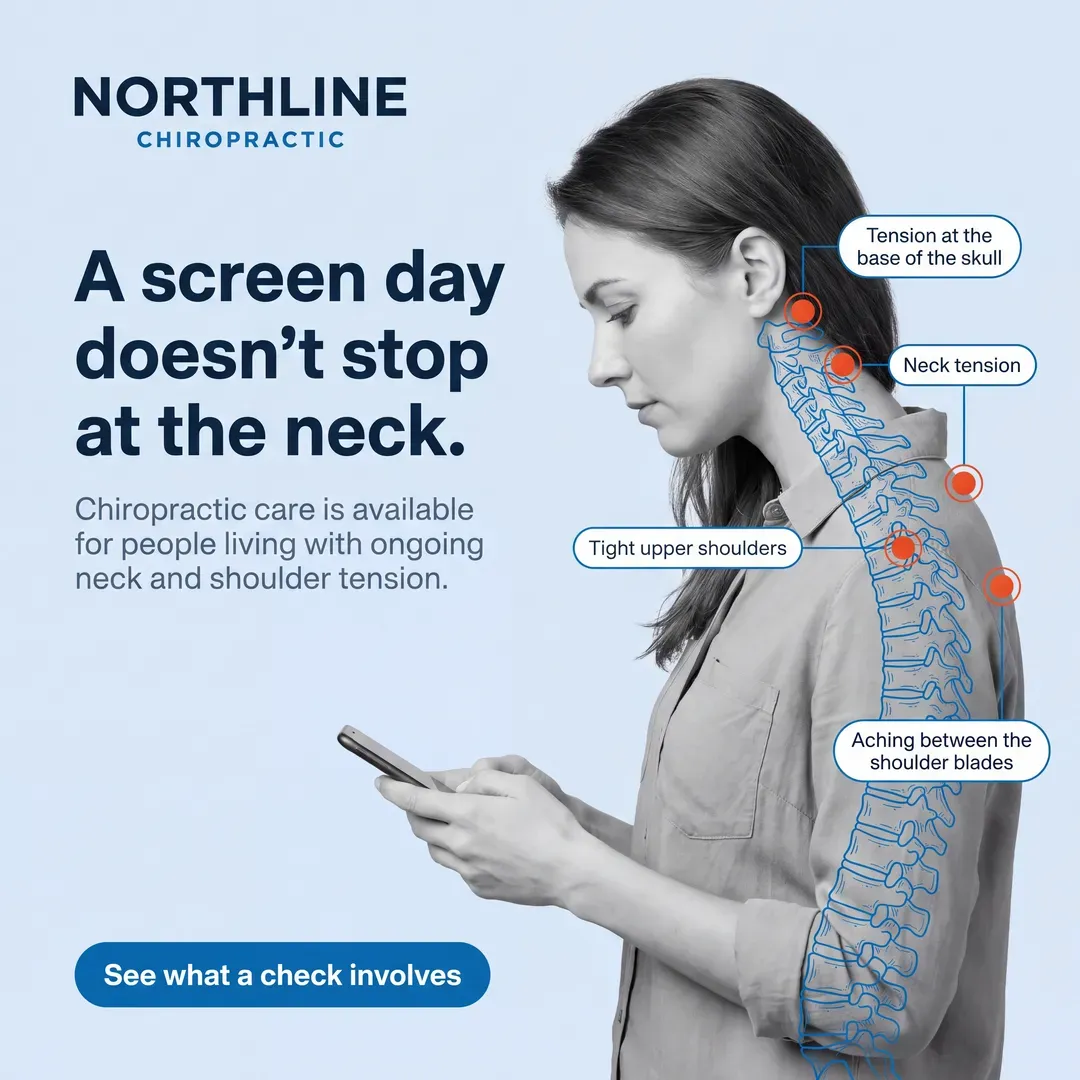
C-02Concept, held
Northline Chiropractic
- Personal attributes
- Craft defect
Four pills name what the reader is feeling and map them onto a body. That is the Meta rule at its most direct. The drawn spine also runs outside the back it belongs to.
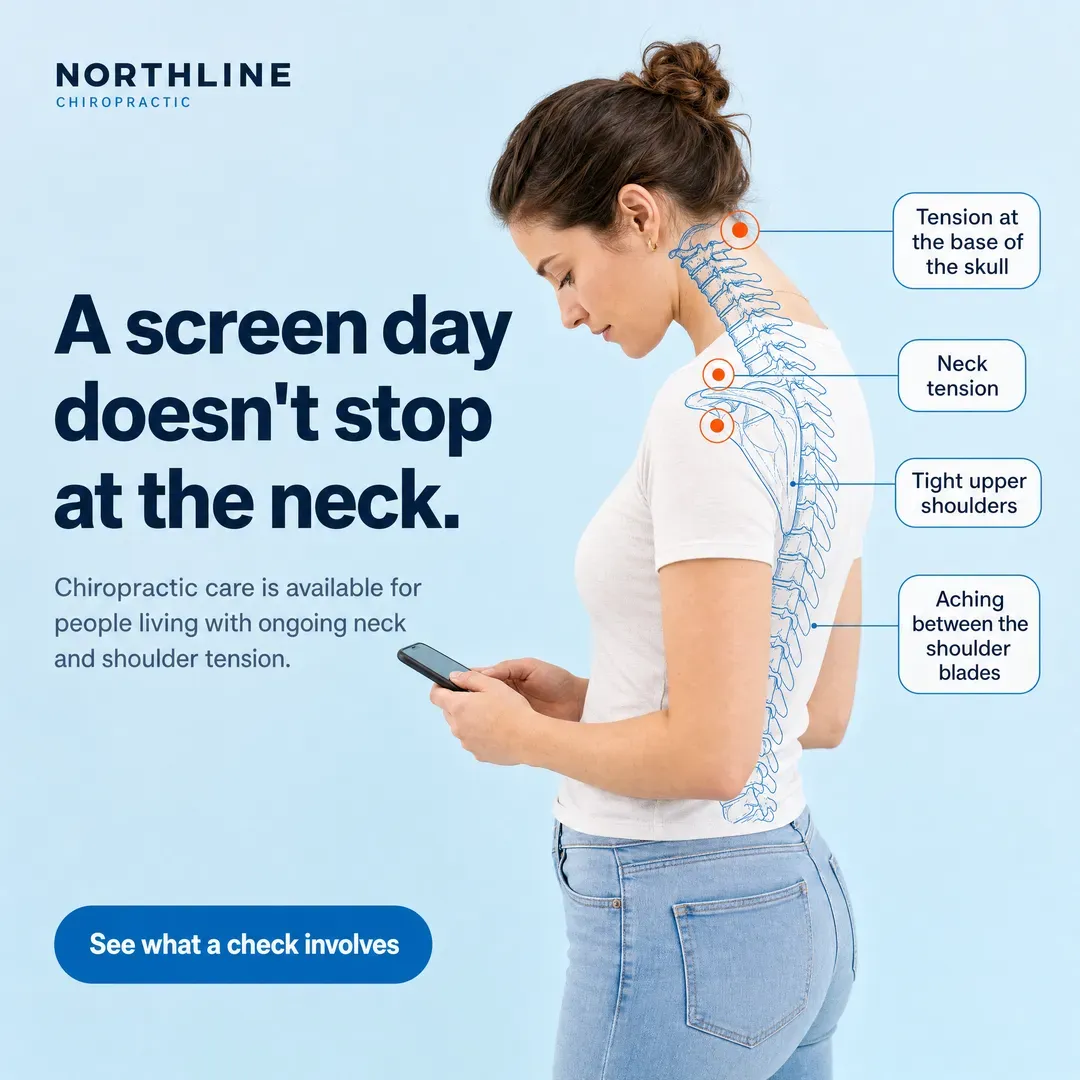
C-04Concept, held
Northline Chiropractic
- Personal attributes
- Craft defect
The same problem as the one before it, with worse drawing: the ribcage and lumbar spine are rotated and offset from the body they sit in.
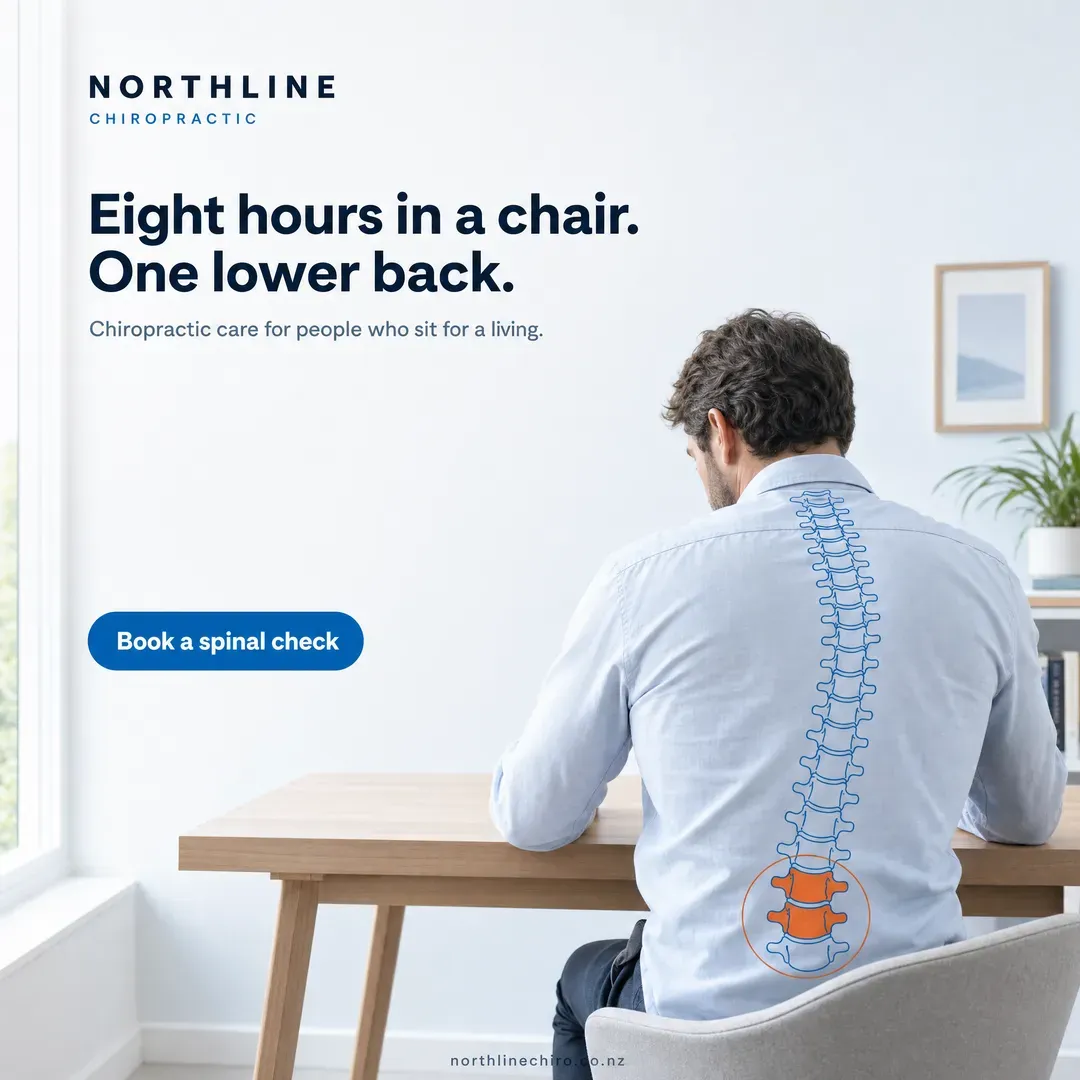
C-05Concept, held
Northline Chiropractic
- Diagnosis in an ad
- Craft defect
A symptom marked onto a body again. The footer domain is also set too low in contrast to read at feed size.
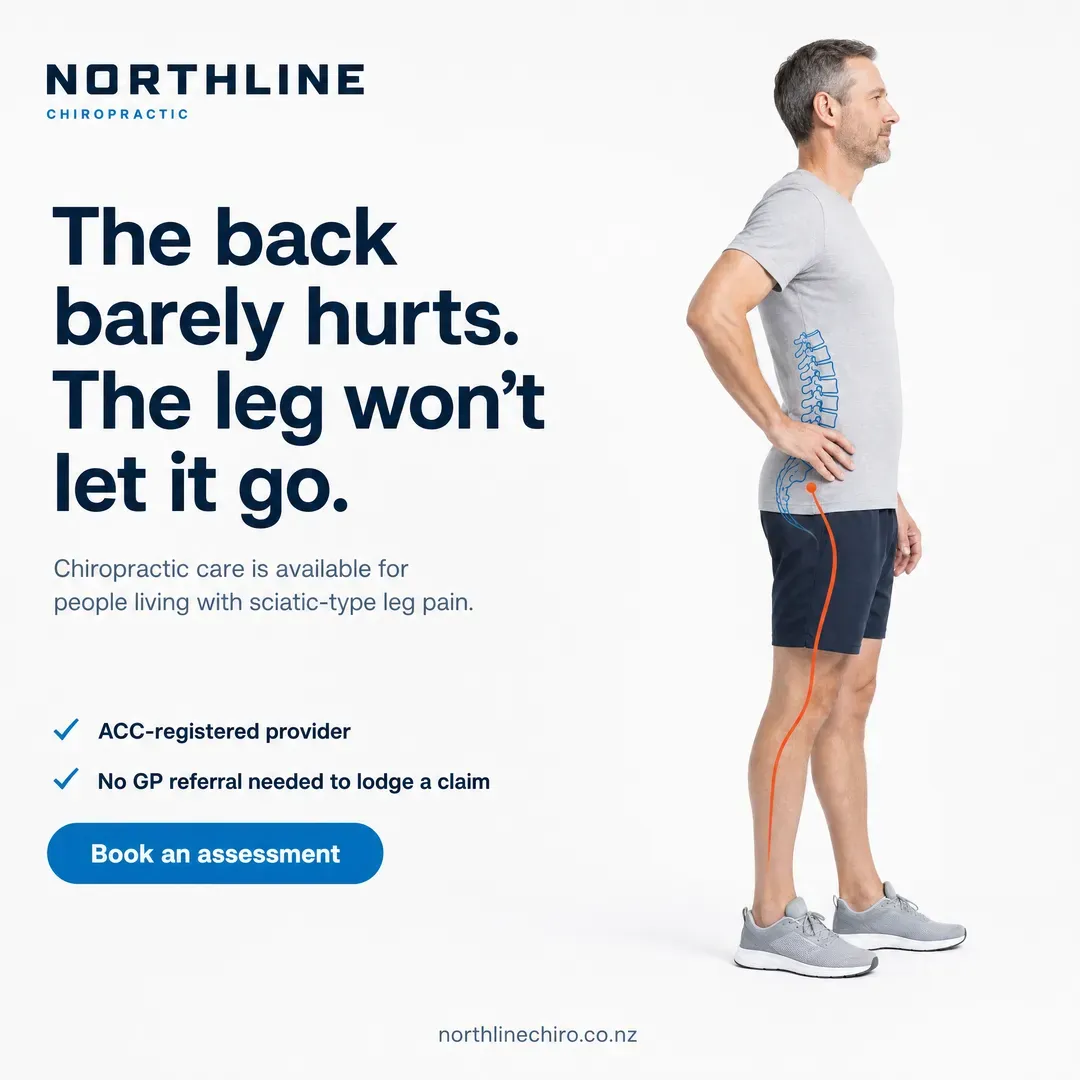
C-06Concept, held
Northline Chiropractic
- Unsourced claim
- Diagnosis in an ad
Two ACC entitlement claims asserted on behalf of a clinic that does not exist, over an orange nerve path drawn down a leg.

C-07Concept, held
Kauri Chiropractic
- Red flag symptom
Leads on morning stiffness, a symptom that can point to something needing assessment rather than a single answer, and no line in the frame tells the reader to get it checked.

C-08Concept, held
Kauri Chiropractic
- Invented figure
- Outside scope
- Craft defect
A daily lifting count with nothing behind it, advice that reaches past the profession's scope, and a wordmark that reads as a general healthcare brand while the word chiropractic never appears.

C-09Concept, held
Kauri Chiropractic
- Unsourced claim
- Outside scope
Asserts a breadth of training, and by implication a scope, with nothing cited behind it. First rung of the substantiation ladder.

C-10Concept, held
Kauri Chiropractic
- Unsourced claim
ACC registration asserted as a fact about a clinic that does not exist.

C-11Concept, held
Axis Chiropractic
- Idealised body
- Unsafe advice
A gym physique used as the proof, under copy that encourages the reader to keep training through lower back strain.
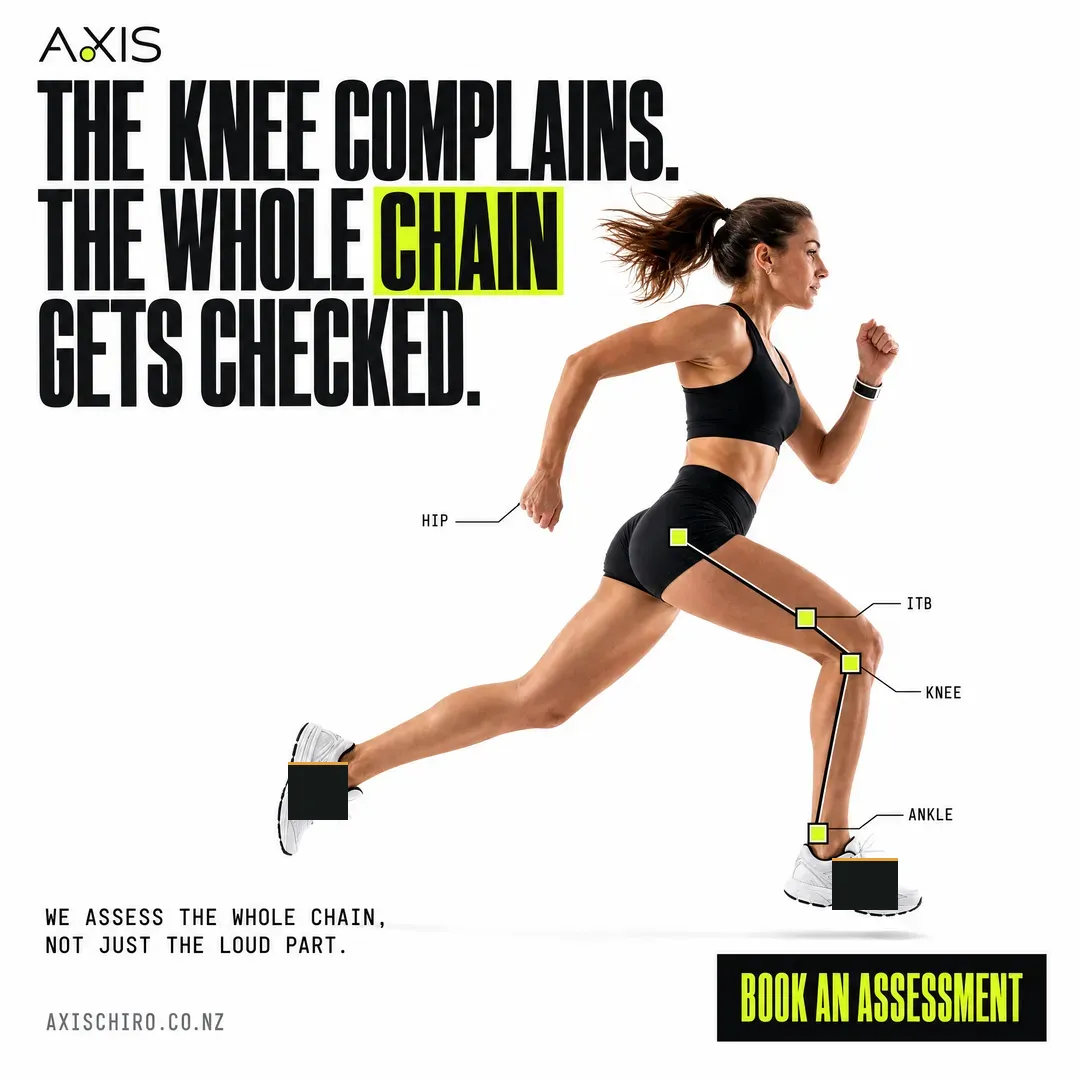
C-12Concept, held
Axis Chiropractic
- Trade mark
- Idealised body
A real footwear brand's logo is rendered on both shoes, blocked out here. The body doing the running is a Meta problem on its own.

C-13Concept, held
Axis Chiropractic
- Idealised body
The copy is clean, which is the frustrating part. The bare torso carrying it is not.

C-14Concept, held
Axis Chiropractic
- Unsourced claim
An unqualified ACC headline, stated as a fact about a clinic that does not exist. It would risk misleading conduct under the Fair Trading Act if it ever ran.
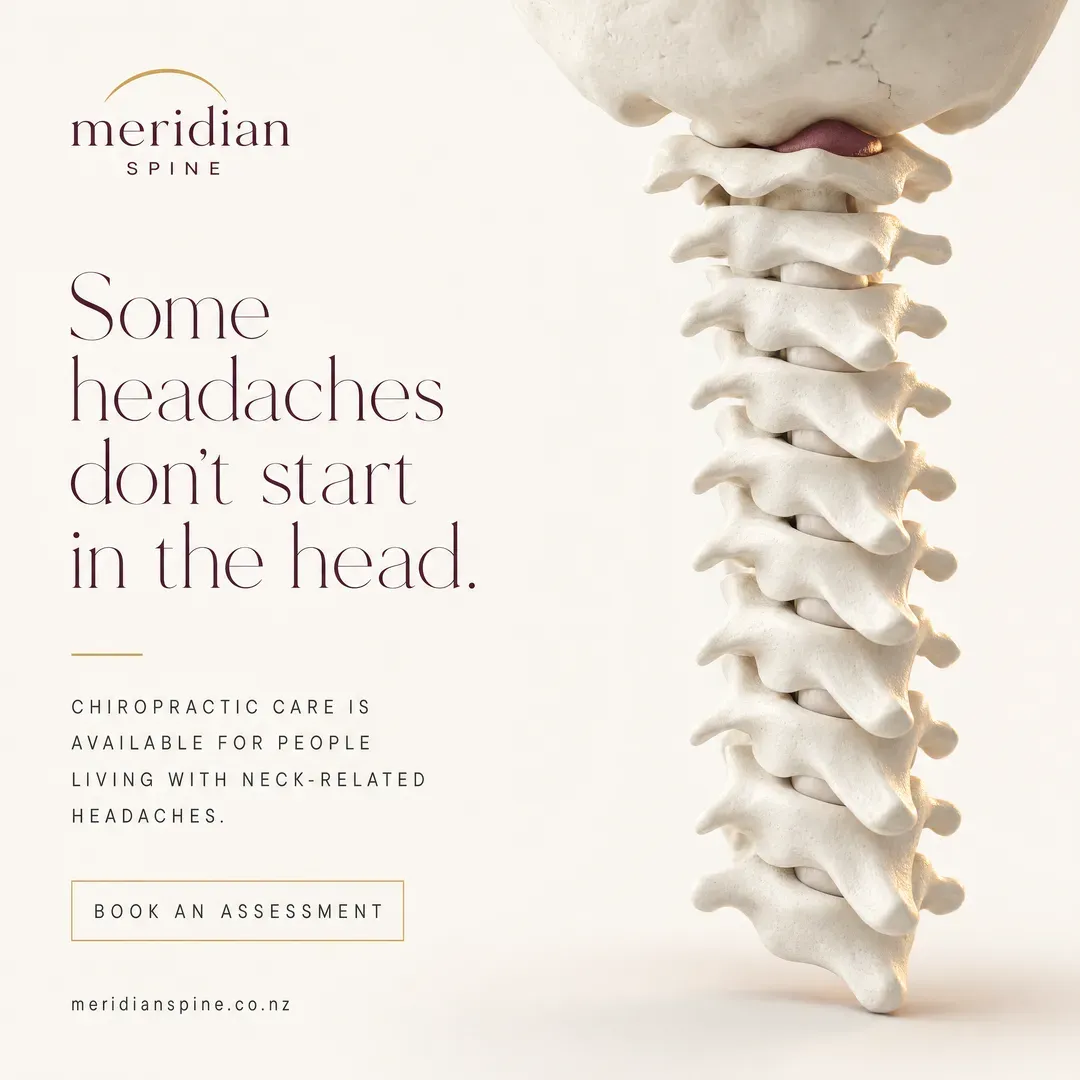
C-15Concept, held
Meridian Spine
- Unsourced claim
States where a common symptom originates, flat, as settled fact, with nothing cited.
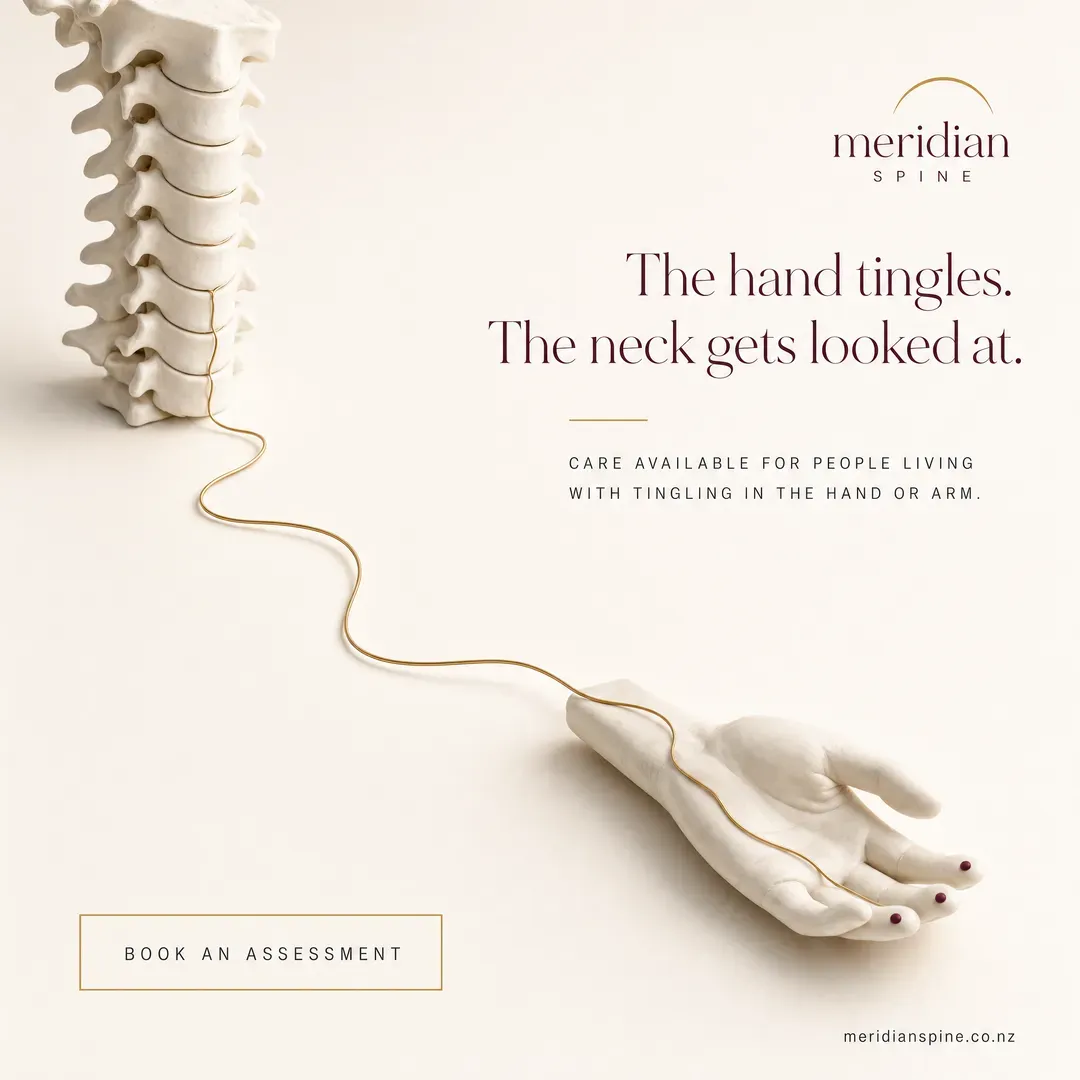
C-16Concept, held
Meridian Spine
- Red flag symptom
Names hand and arm tingling and offers one answer to it, with no referral line anywhere in the frame. The highest-risk piece in the set.
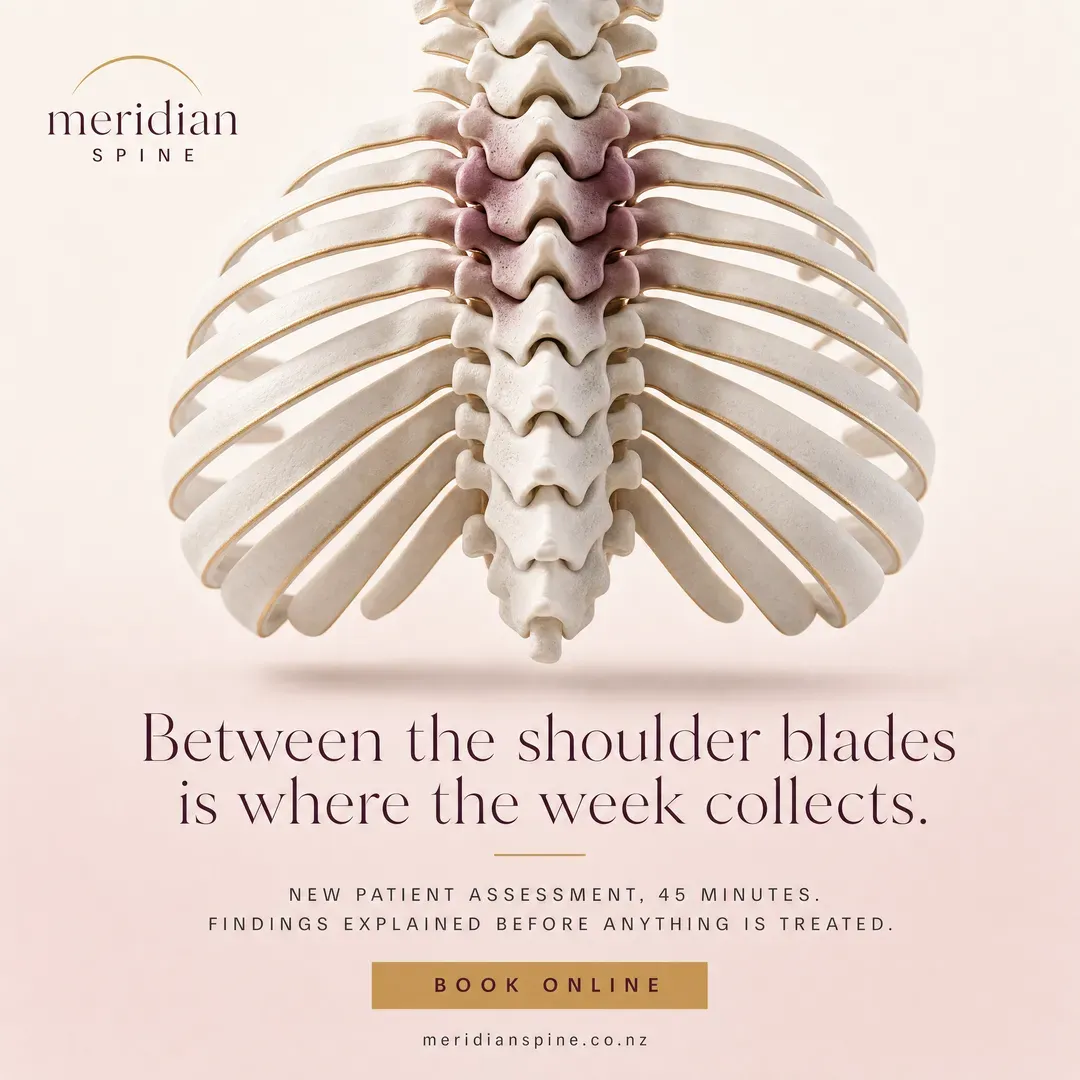
C-18Concept, held
Meridian Spine
- Invented figure
A duration set as the dominant element, sourced to nothing.
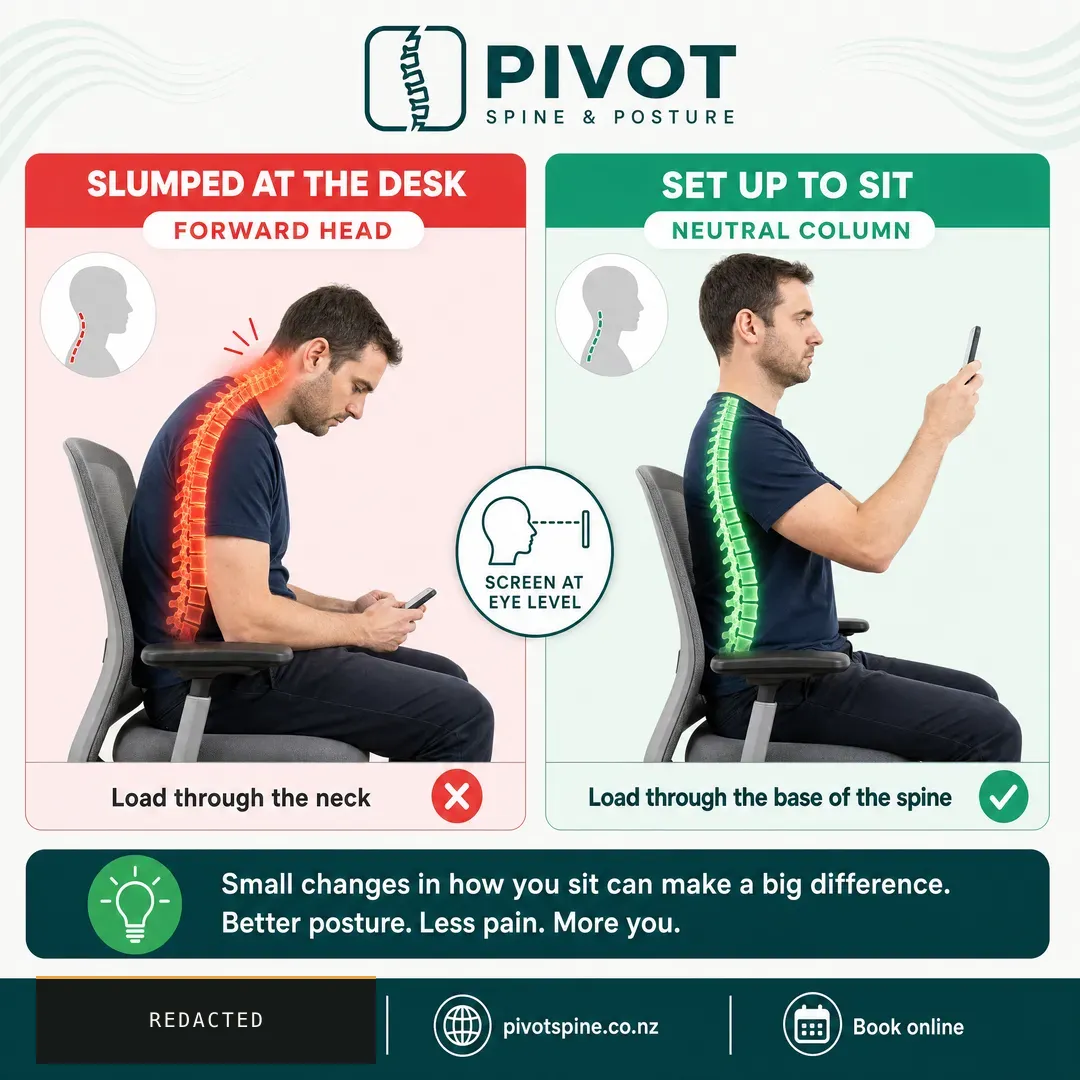
C-19Concept, held
Pivot Spine & Posture
- Location rendered
- Outcome claim
A city and country printed beside a map pin, blocked out here, under two words that promise the reader a result.
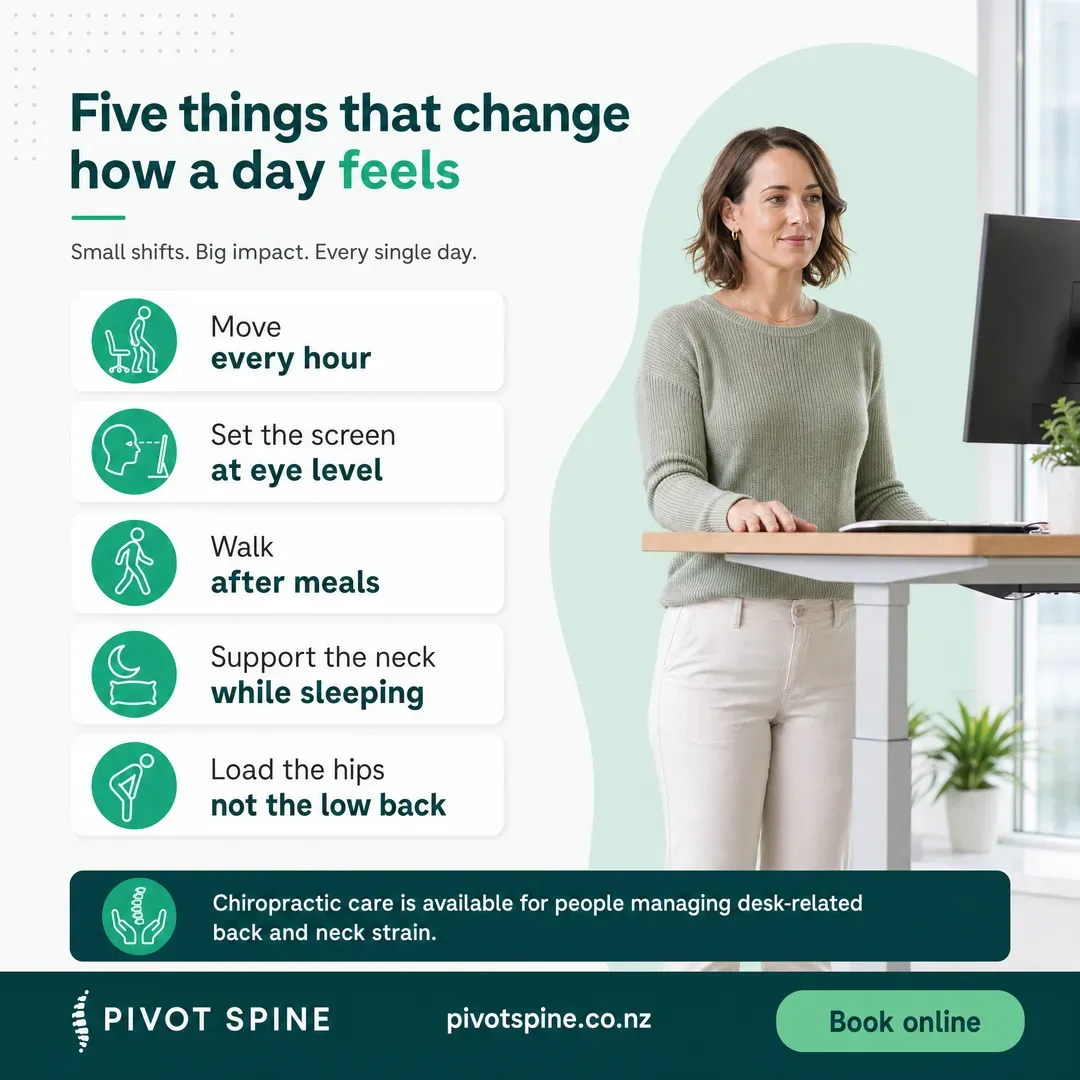
C-20Concept, held
Pivot Spine & Posture
- Unsourced claim
- Outside scope
A list of benefit claims with no source attached, and one item on it is metabolic advice that sits outside a spinal scope of practice.
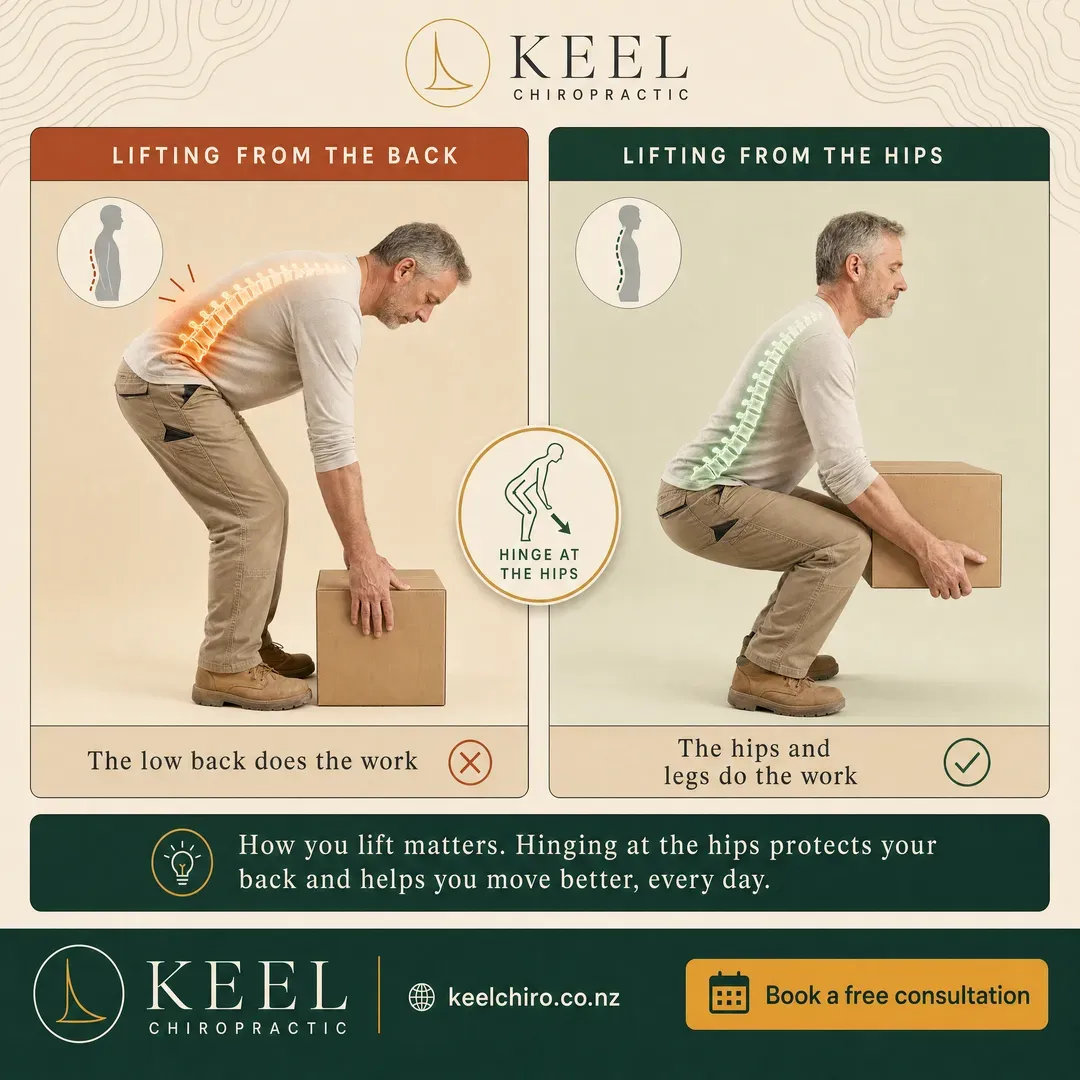
C-21Concept, held
Keel Chiropractic
- Outcome claim
- Inducement
Two promises about what the care will do, and a free consultation offered as the way in with none of the conditions the Board standard attaches to an introductory offer.
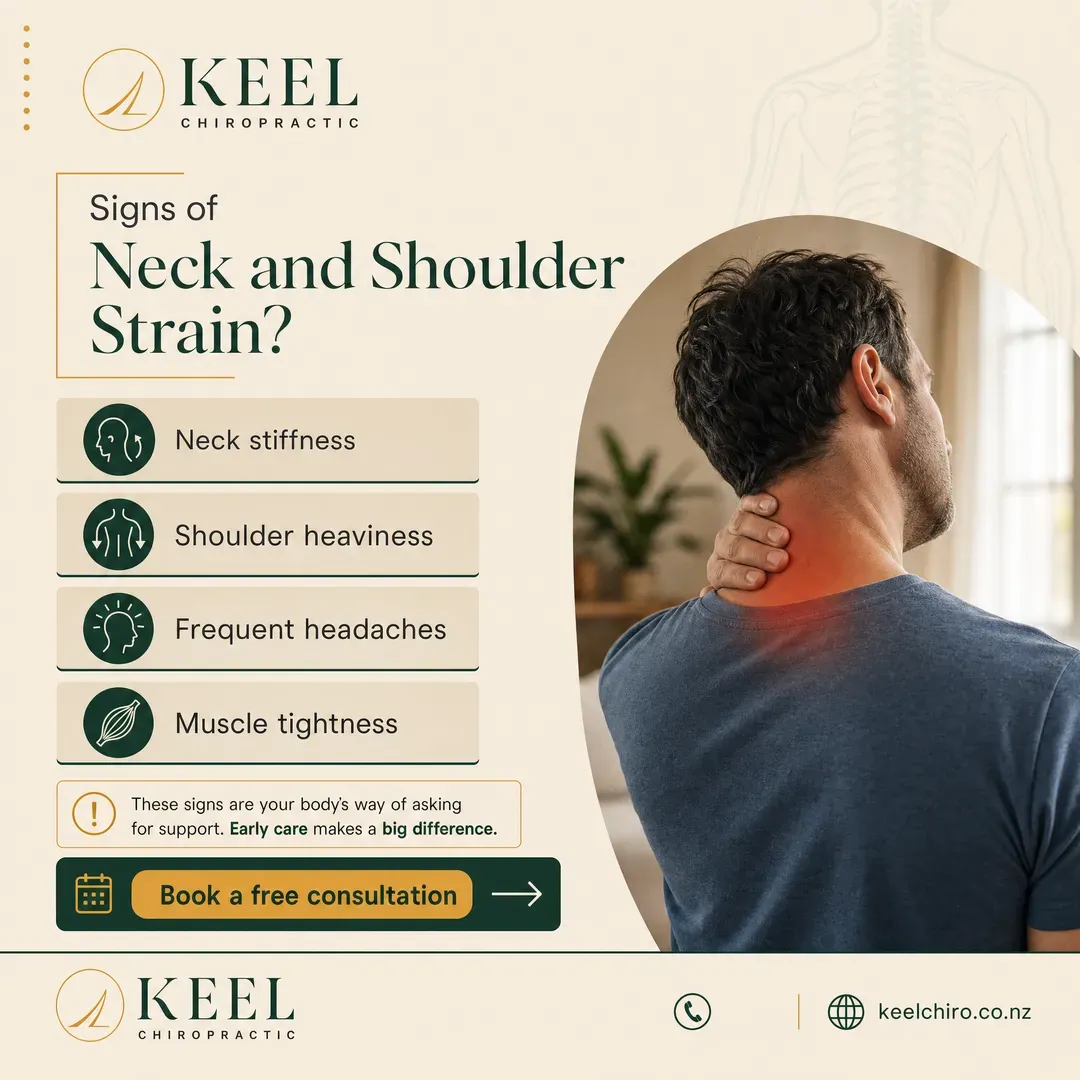
C-22Concept, held
Keel Chiropractic
- Personal attributes
- Red flag symptom
A four-row symptom checklist under a question aimed straight at the reader. The worst artefact in the set, and the clearest single illustration of what Meta prohibits.
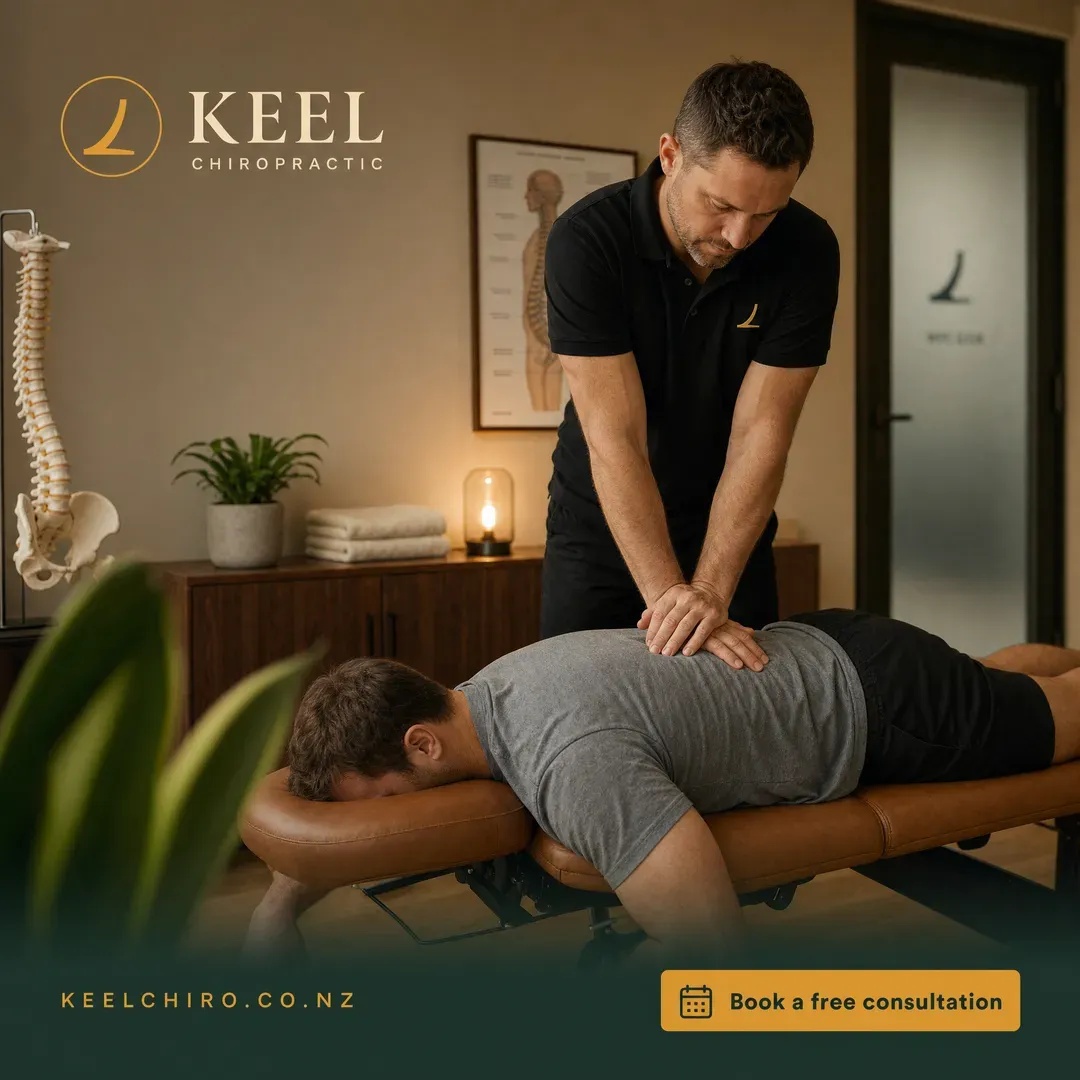
C-23Concept, held
Keel Chiropractic
- Synthetic person
- Unsourced claim
A generated practitioner and a generated patient, shot as documentary clinic photography, with nothing in the frame saying so.
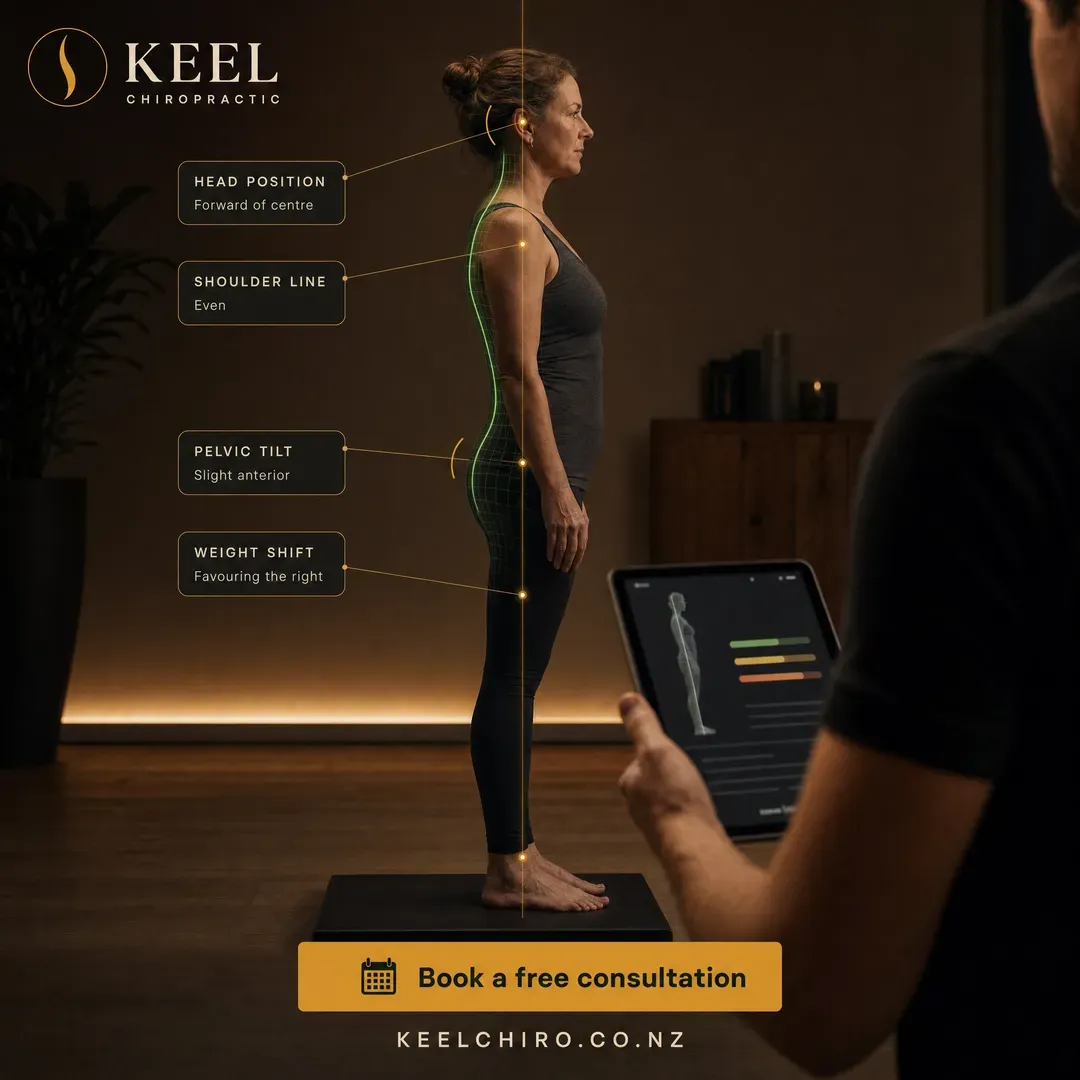
C-24Concept, held
Keel Chiropractic
- Diagnosis in an ad
- Unsourced claim
Implies an analysis technology the clinic does not have, and uses it to tell the reader what is wrong with them.
Dental
Advertise the appointment, not the smile afterwards.
Cosmetic and routine care in one voice. The Dental Council advertising practice standard requires every claim to be truthful, accurate and verifiable, and bars advertising that creates unrealistic expectations. It also holds the practitioner responsible for advertising made on their behalf, which includes an agency's. That takes most outcome claims off the table, so what we build on is the appointment, the written plan and the cost that comes before the decision.
Concept work for an invented clinic. Never run, no result claimed.
On the wall
6 cleared our check
D-02Concept
Fantail Dental Care
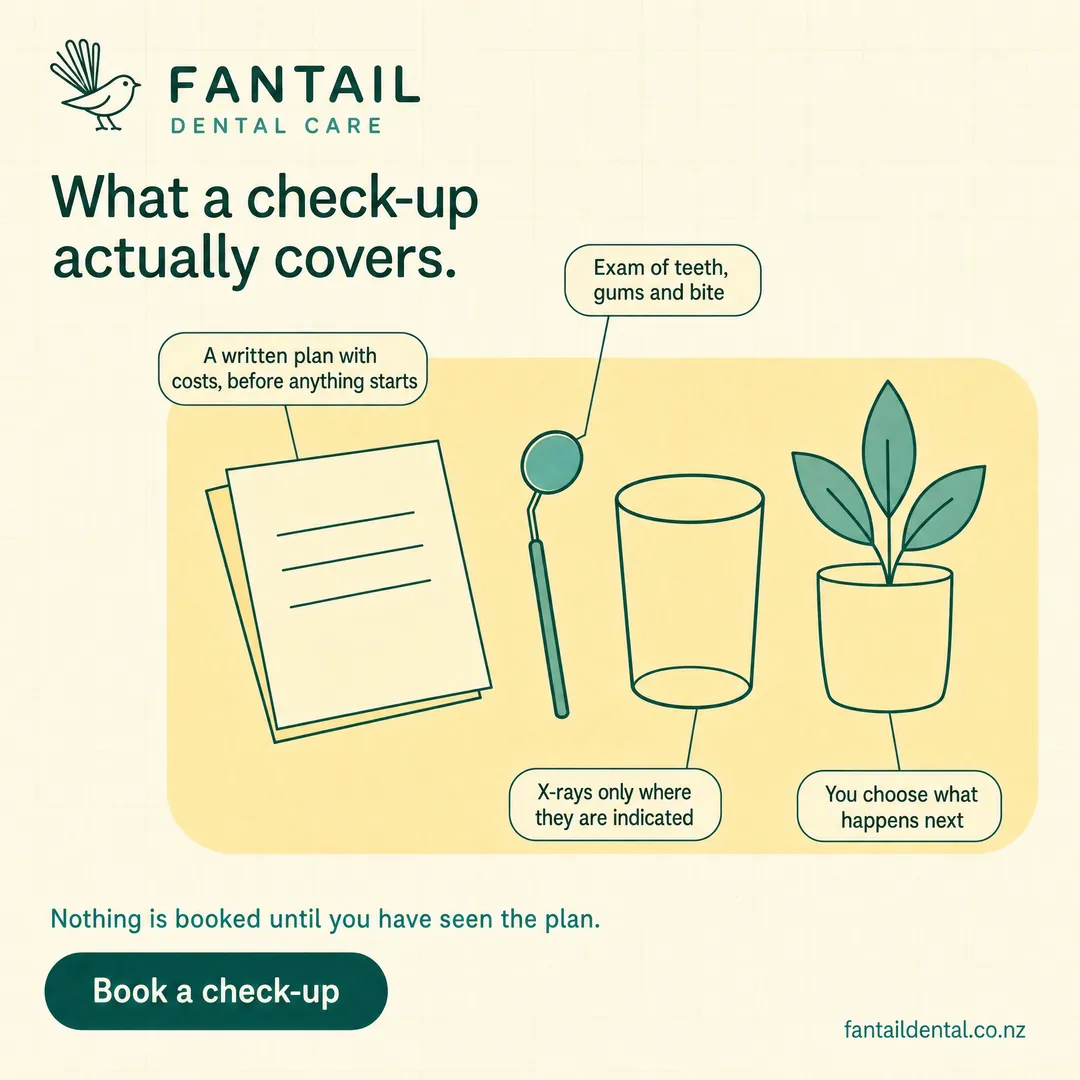
What a check-up covers
D-03Concept
Fantail Dental Care
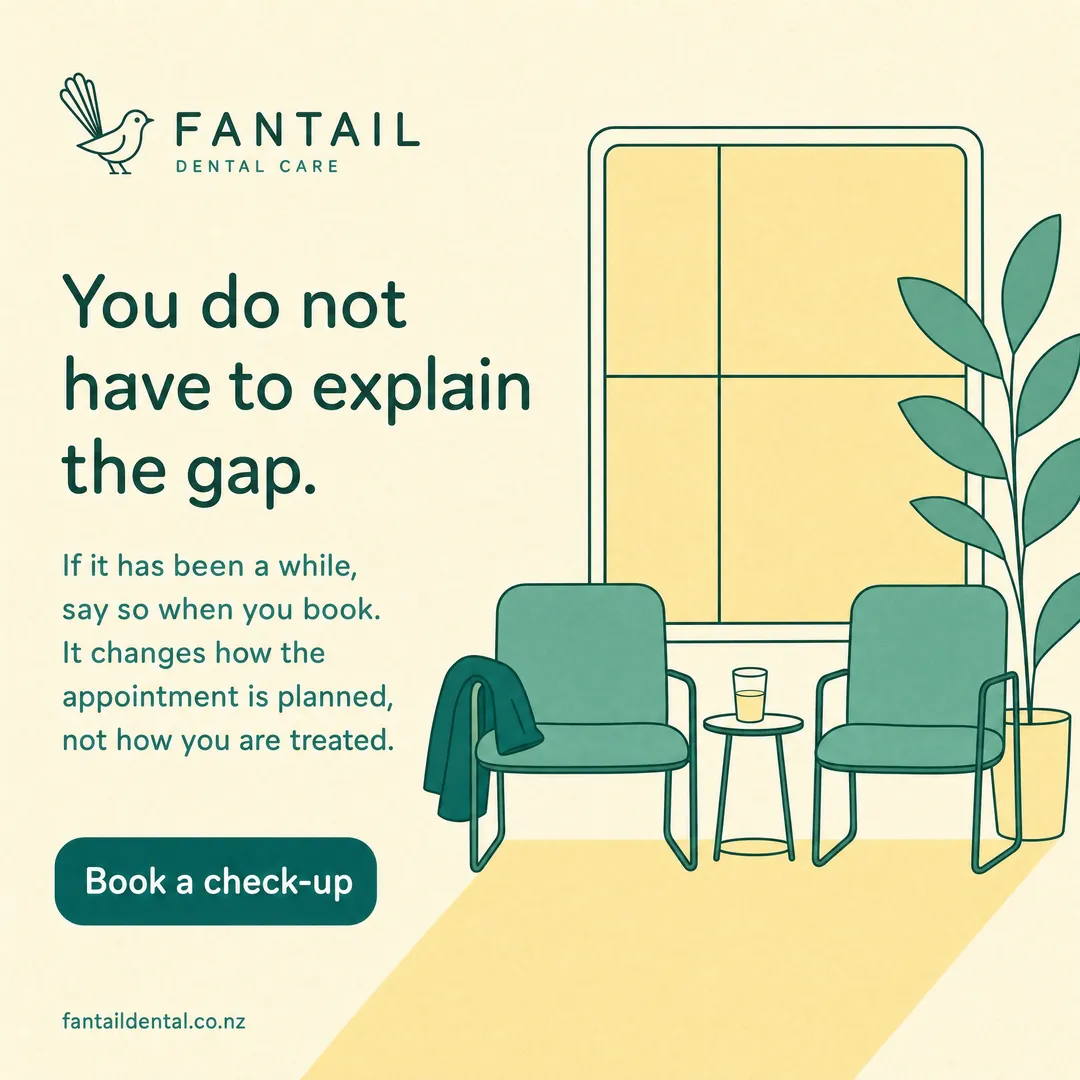
The gap since the last visit

D-05Concept
Parallel Dental
Orthodontics for adults
D-06Concept
Parallel Dental
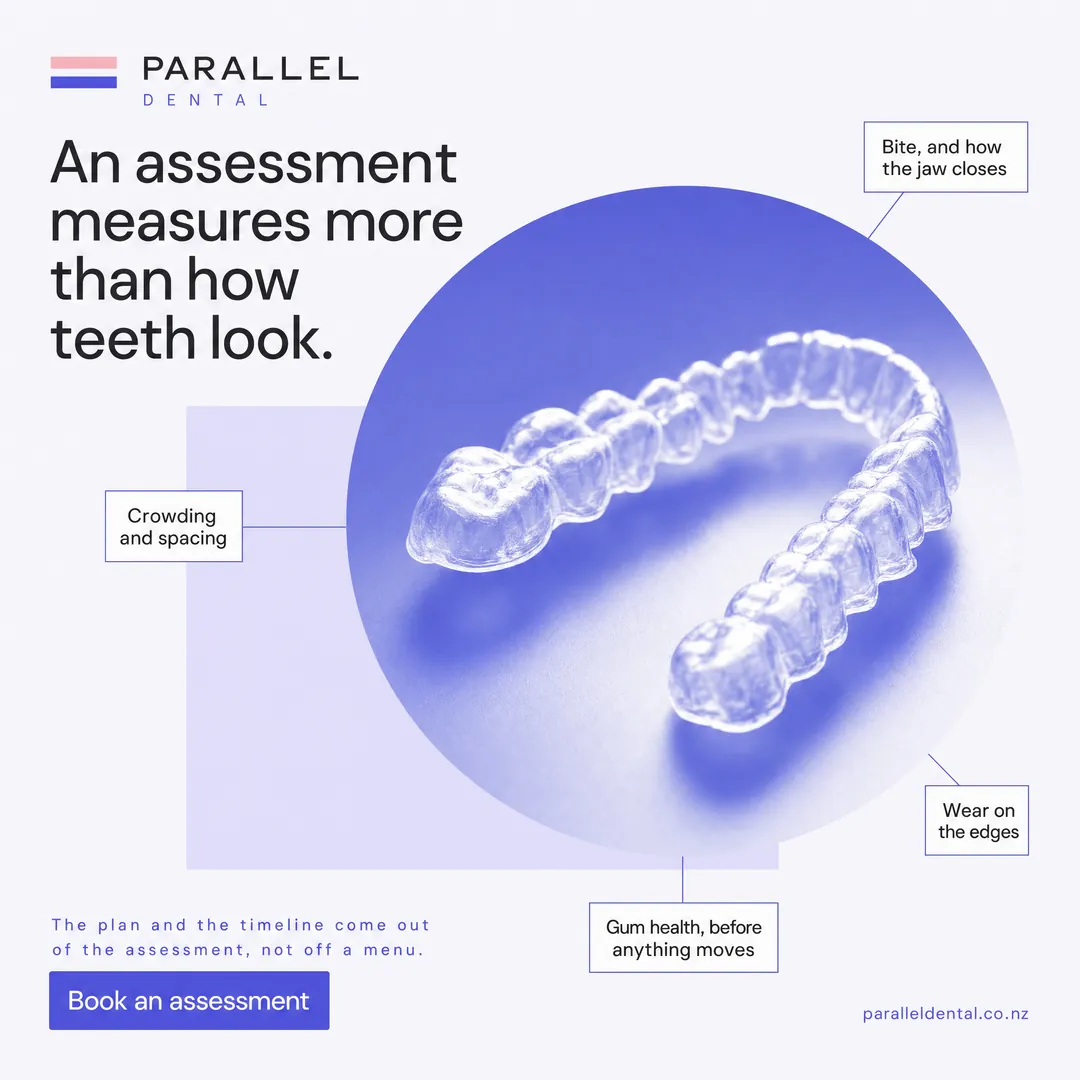
What an assessment measures
D-07Concept
Parallel Dental
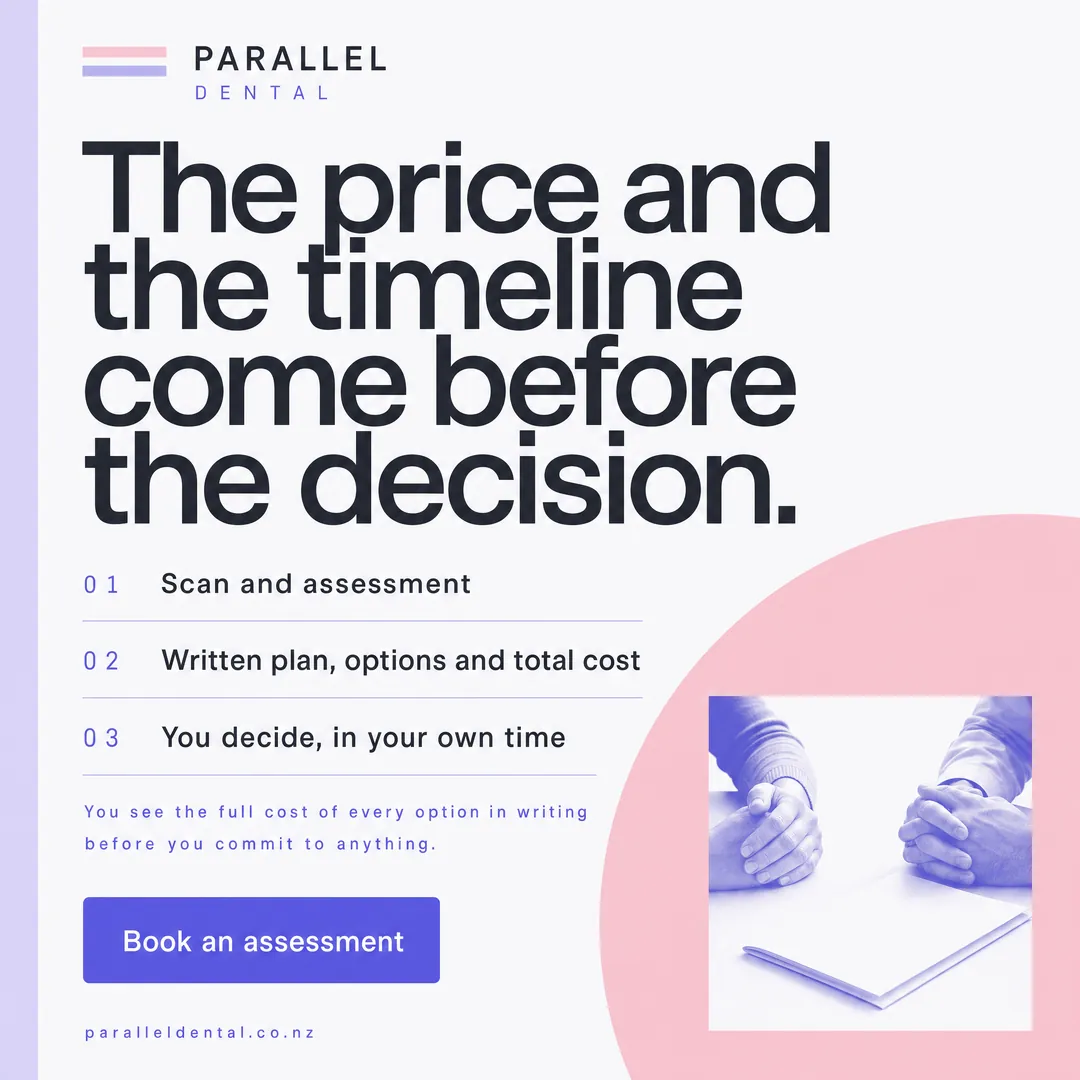
Cost in writing, before the decision
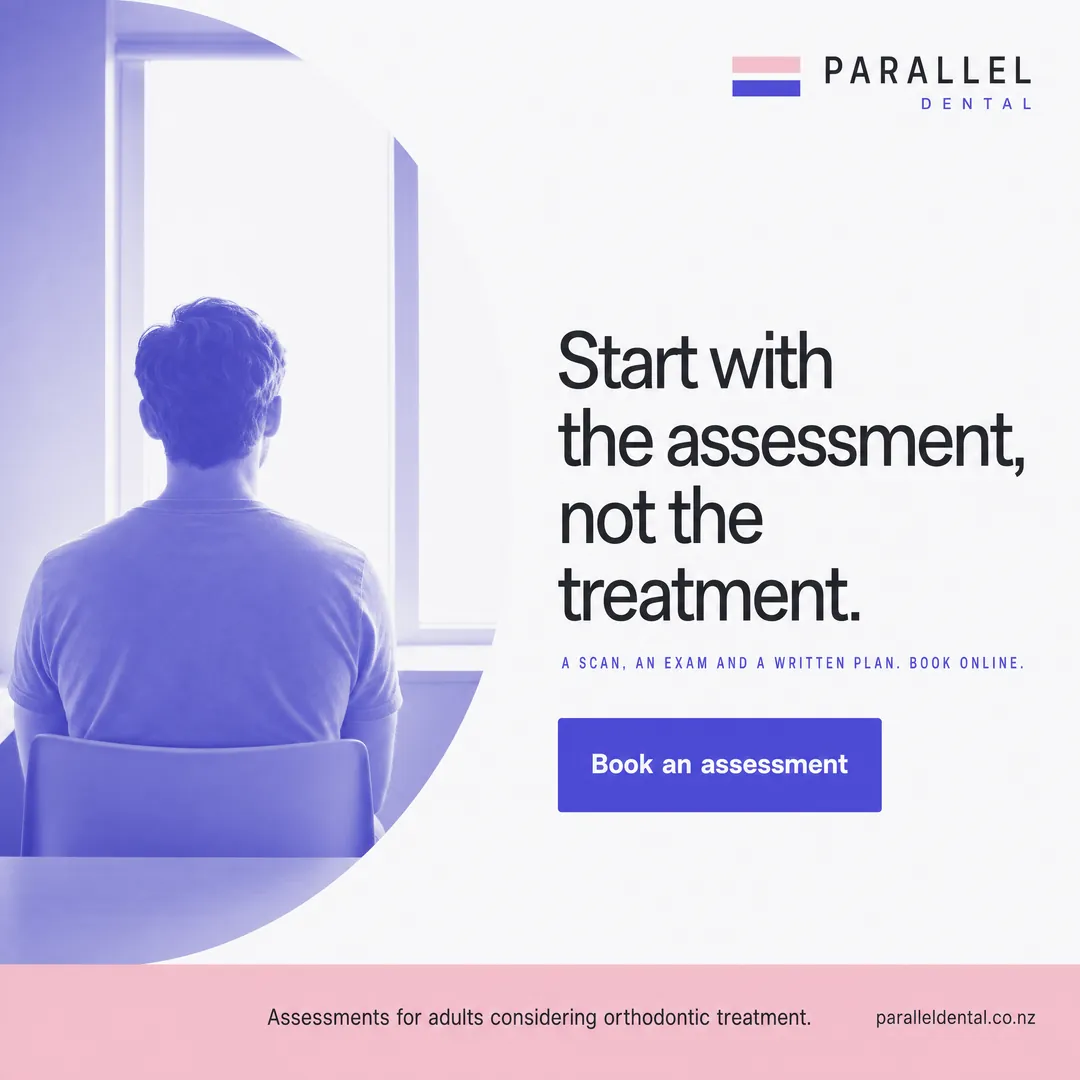
D-08Concept
Parallel Dental
Assessment first, treatment second
Held back
9 flagged
The dental pile is mostly a claim with no source: a funding entitlement, a timeframe, an award nobody gave. Behind that sits the outcome, a promise about how the teeth will work and a finished smile standing in as the proof. Take both away and the ad has to be about the appointment instead, which is what the ones above it are.
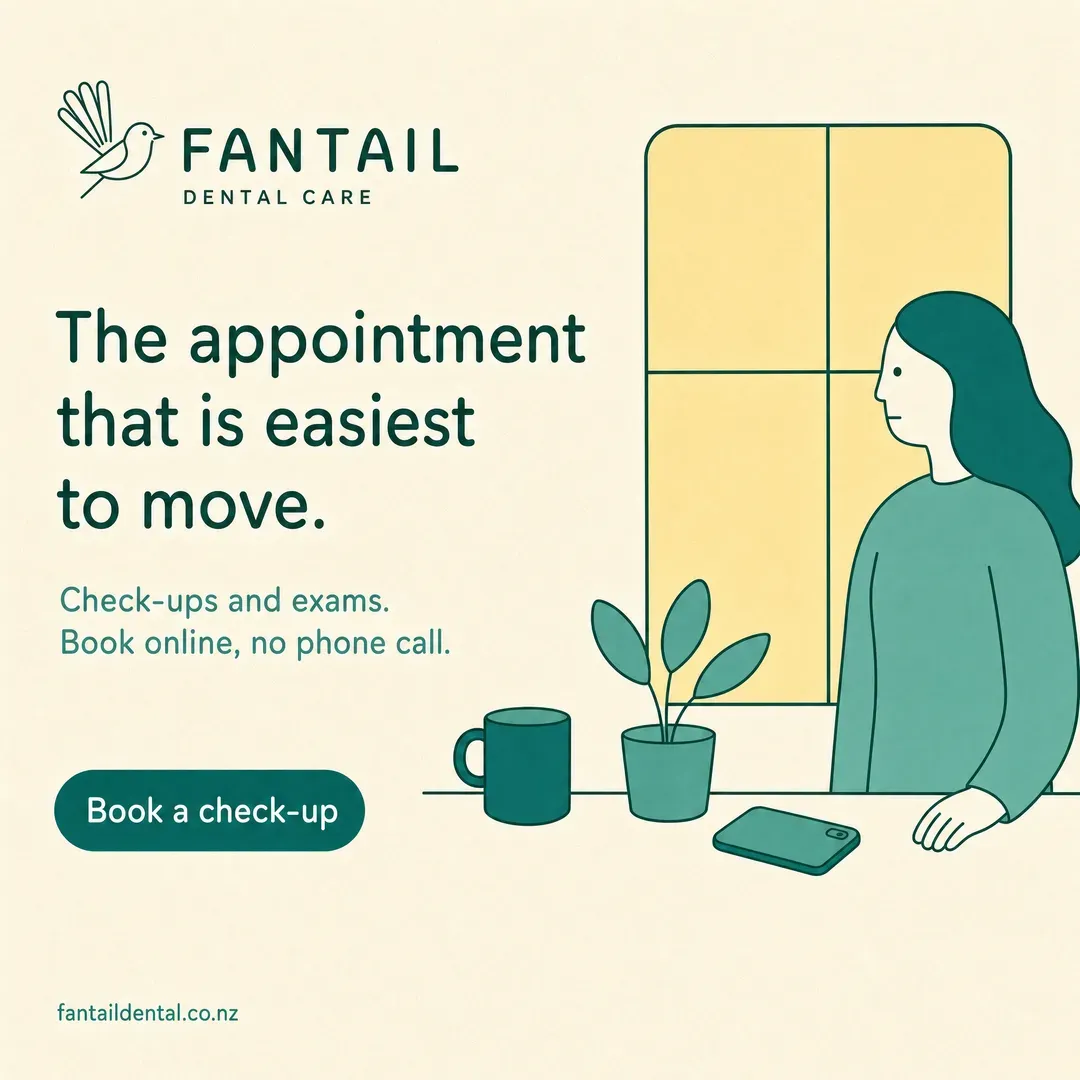
D-01Concept, held
Fantail Dental Care
- Unsourced claim
The softest flag on the page. The headline reads as a promise about rescheduling, and the booking line under it states an operational claim about a practice nobody has checked.
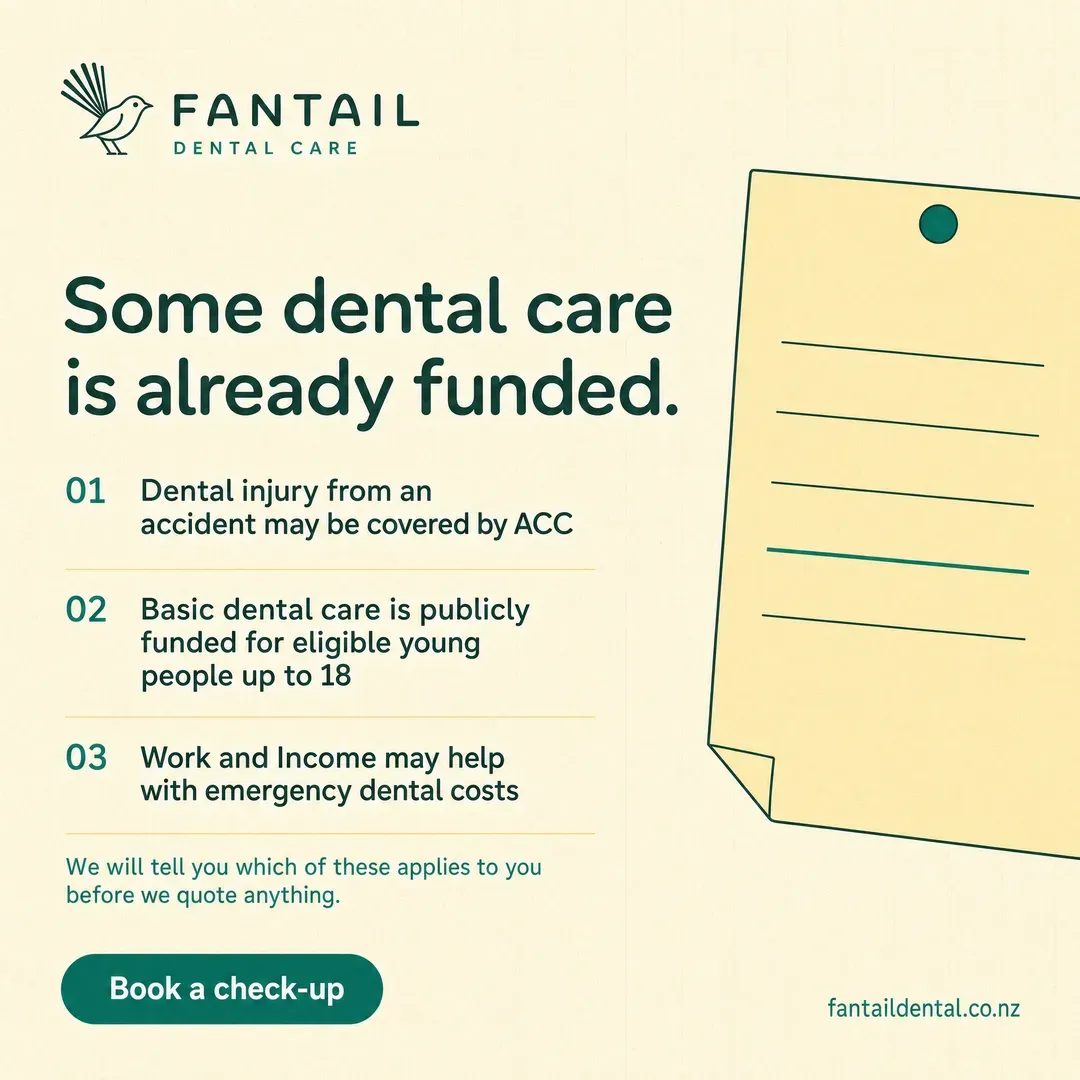
D-04Concept, held
Fantail Dental Care
- Unsourced claim
- Invented figure
Three separate funding entitlements asserted with no citation, and the age printed beside them is stated without the qualifying detail the funding rule carries.
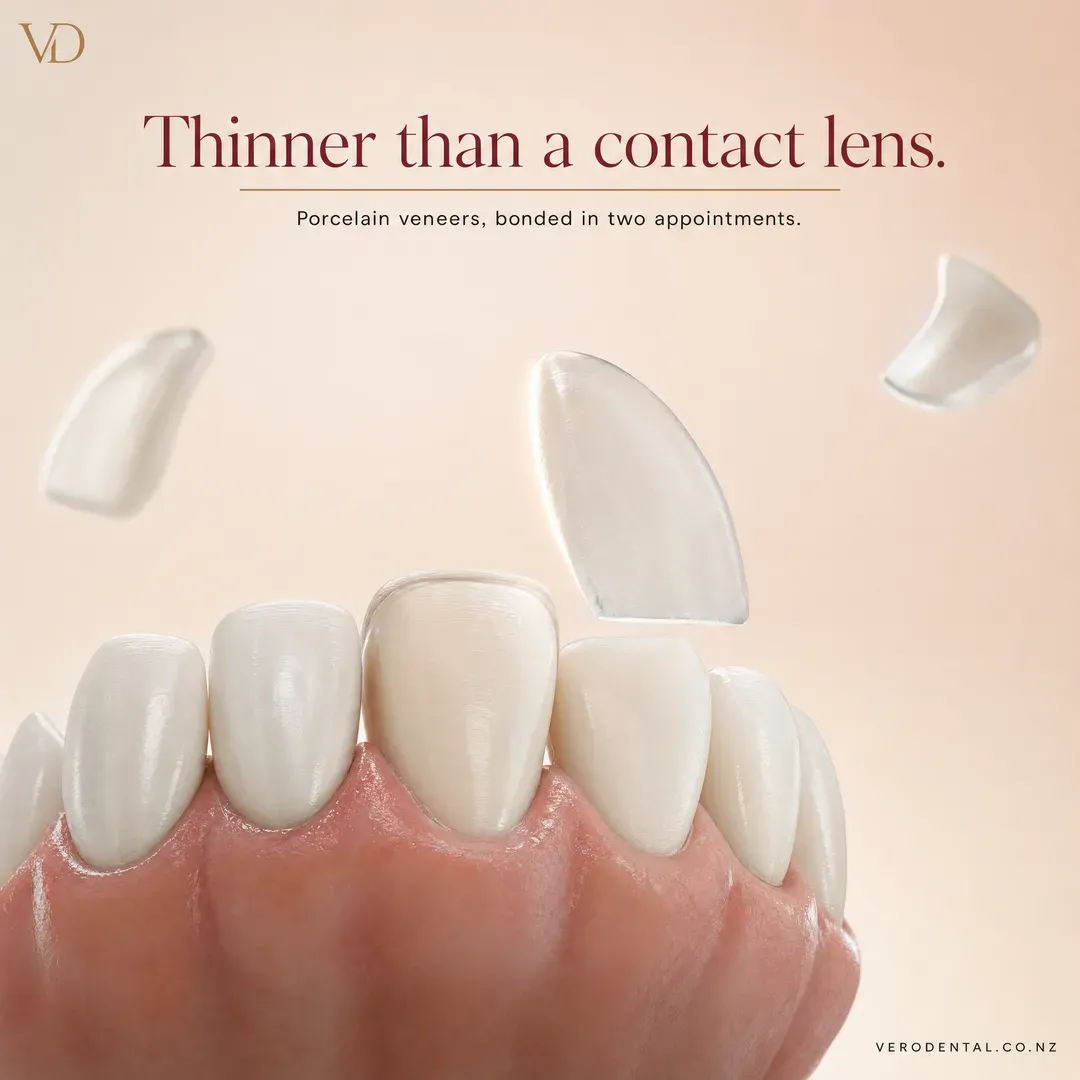
D-09Concept, held
Vero Dental
- Unsourced claim
- Outcome claim
A physical comparison offered as a selling point, with nothing cited behind it either way, over an arch of finished work that is itself the promise.
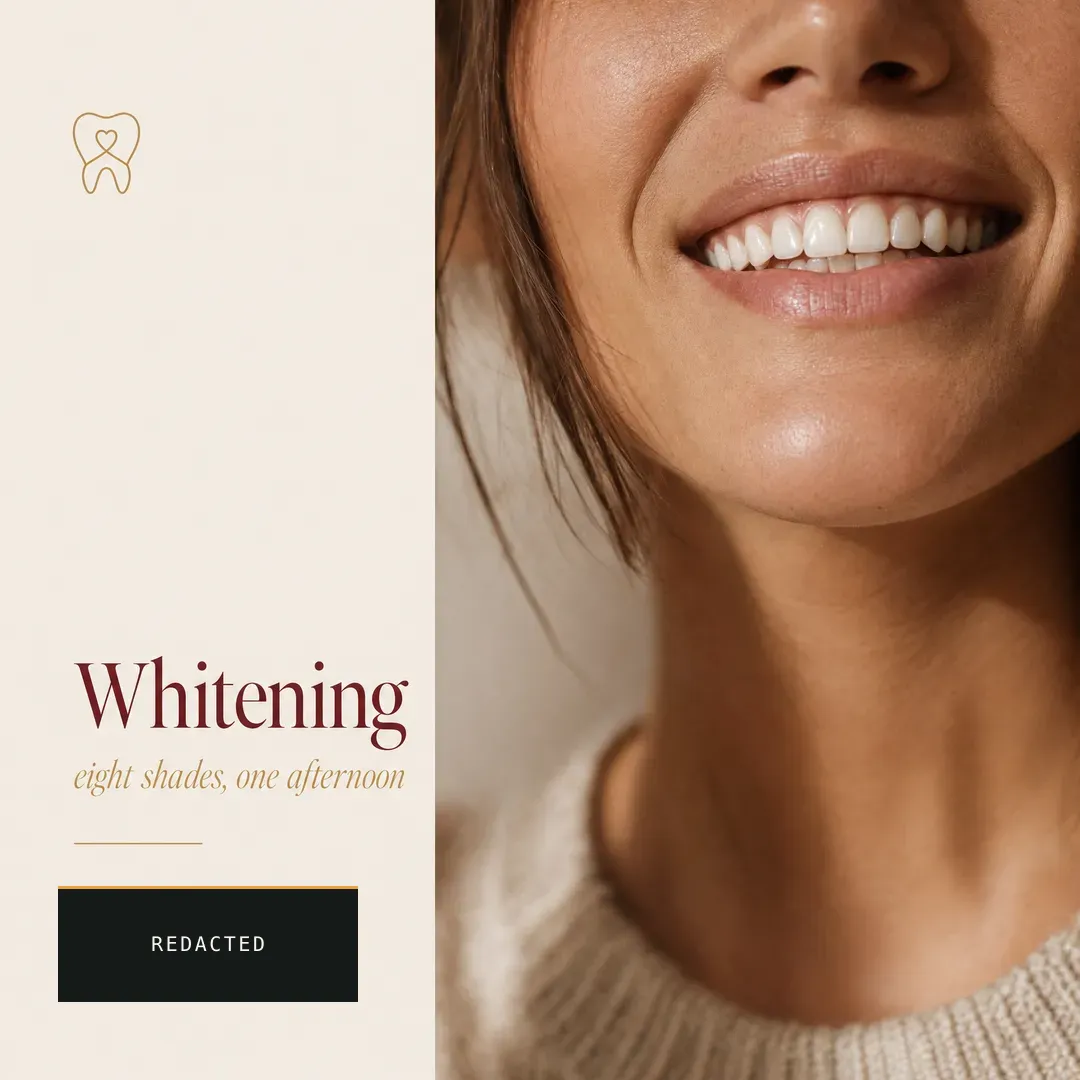
D-10Concept, held
Vero Dental
- Location rendered
- Idealised body
- Unsourced claim
A suburb, a city and a phone number painted into the left rail, all blocked out here, under a shade count and a timeframe that came from nowhere.

D-11Concept, held
Vero Dental
- Unsourced claim
- Invented figure
A plaque that reads as an award nobody gave, beside a founding year the clinic cannot have.

D-12Concept, held
Harbourline Dental
- Personal attributes
- Unsourced claim
Opens by asking the reader about their own mouth, which is the Meta rule, and answers with a timeframe that has no source.
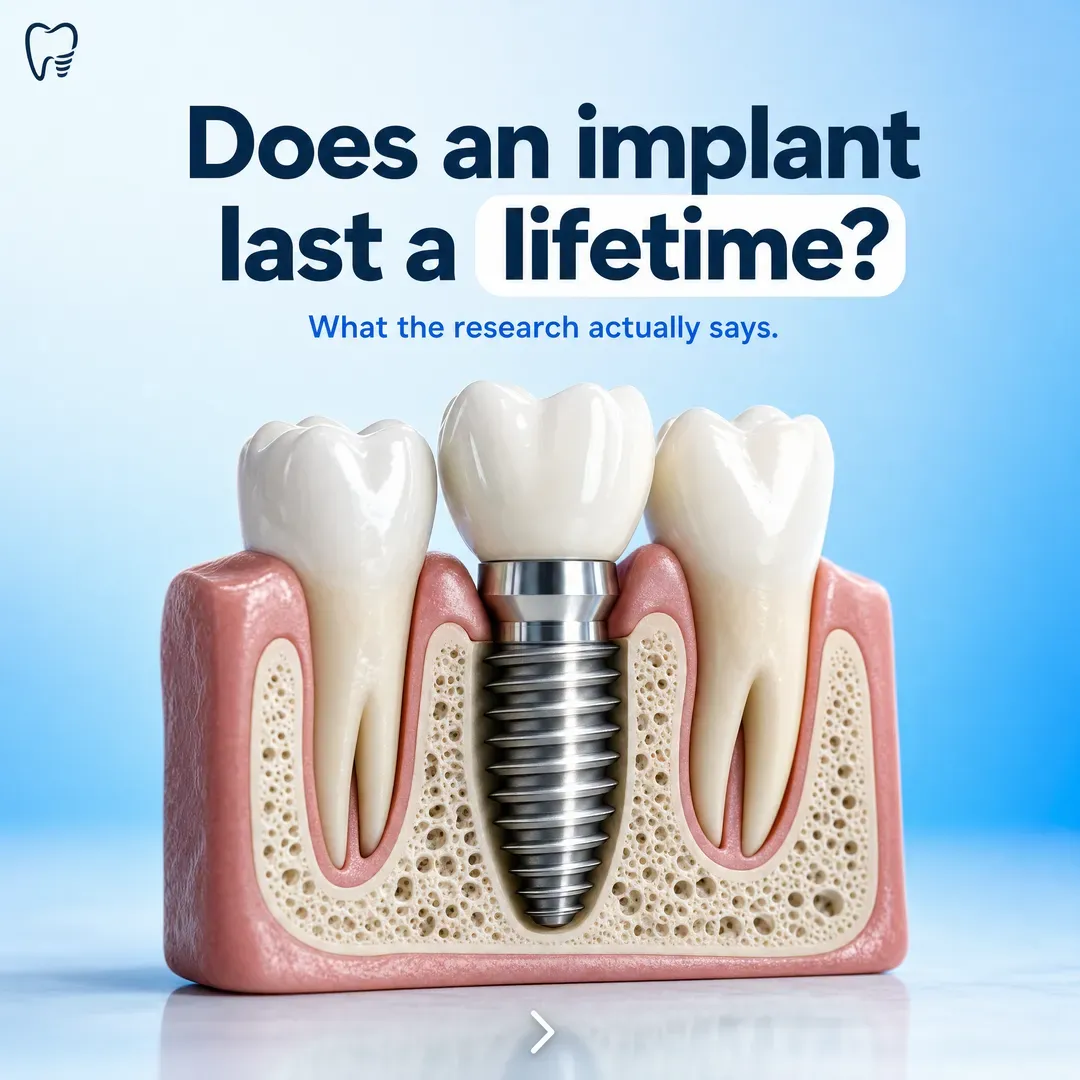
D-13Concept, held
Harbourline Dental
- Unsourced claim
- Invented figure
A rhetorical question that plants a durability claim, a line asserting what the research says without citing any, and a number under both of them.

D-14Concept, held
Harbourline Dental
- Location rendered
- Outcome claim
A suburb and a phone number in the right rail, blocked out here, under an unqualified promise about everyday function that the couple in frame appear to be confirming.
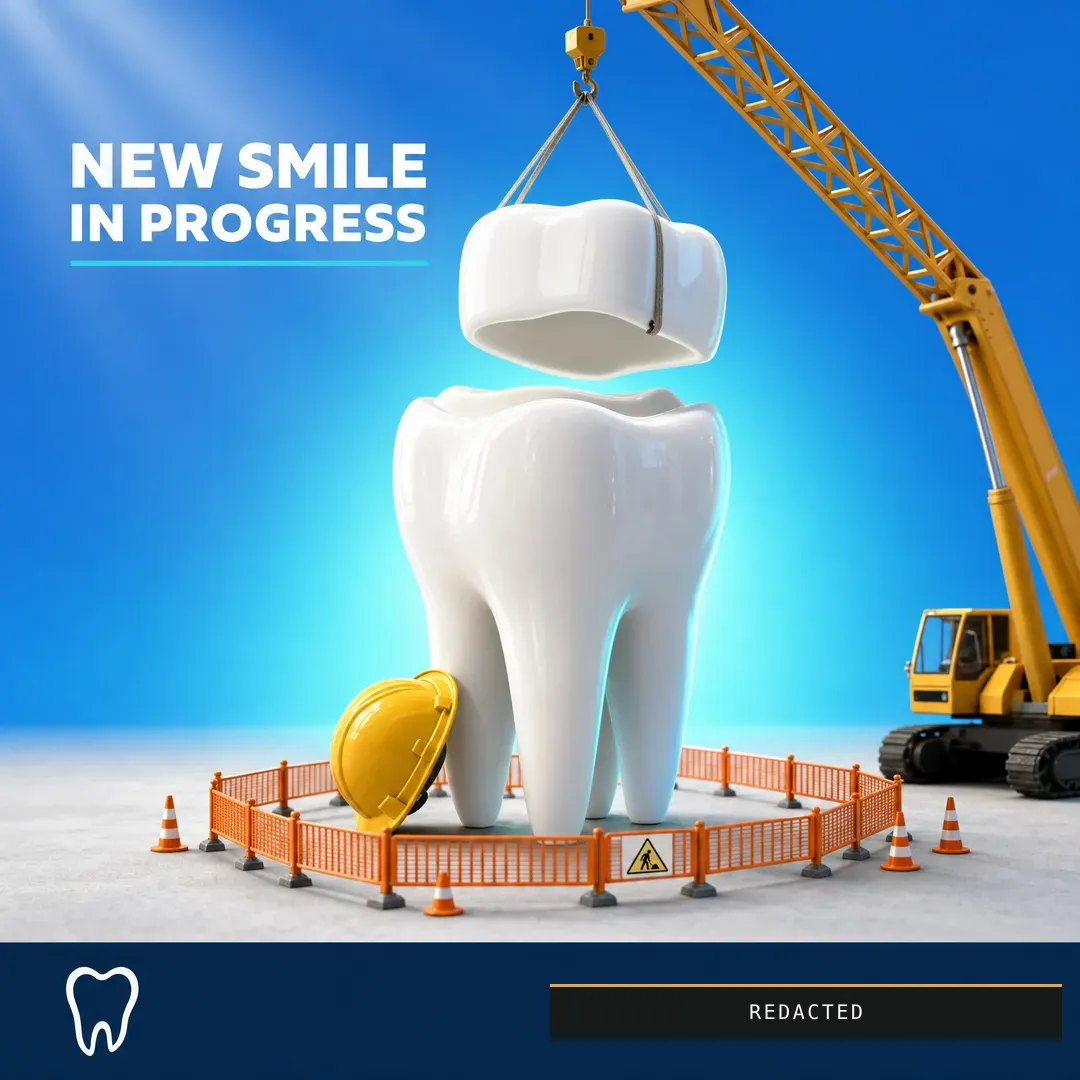
D-15Concept, held
Harbourline Dental
- Location rendered
- Outcome claim
A fabricated New Zealand phone number set into the footer bar, blocked out here, next to a deliverable stated as a certainty.
Medical aesthetics
Advertise the consultation, not the prescription.
The narrowest brief of the three. Under the Medicines Act 1981 and Medsafe's guidance, advertising a prescription medicine to consumers in New Zealand is allowed only within strict limits: approved indications, the mandatory consumer statements in the ad, no testimonials or endorsements, and no discounts or other inducements to buy. Industry pre-vetting through TAPS is voluntary, not a legal requirement.
Concept work for an invented clinic. Never run, no result claimed.
On the wall
6 cleared our check
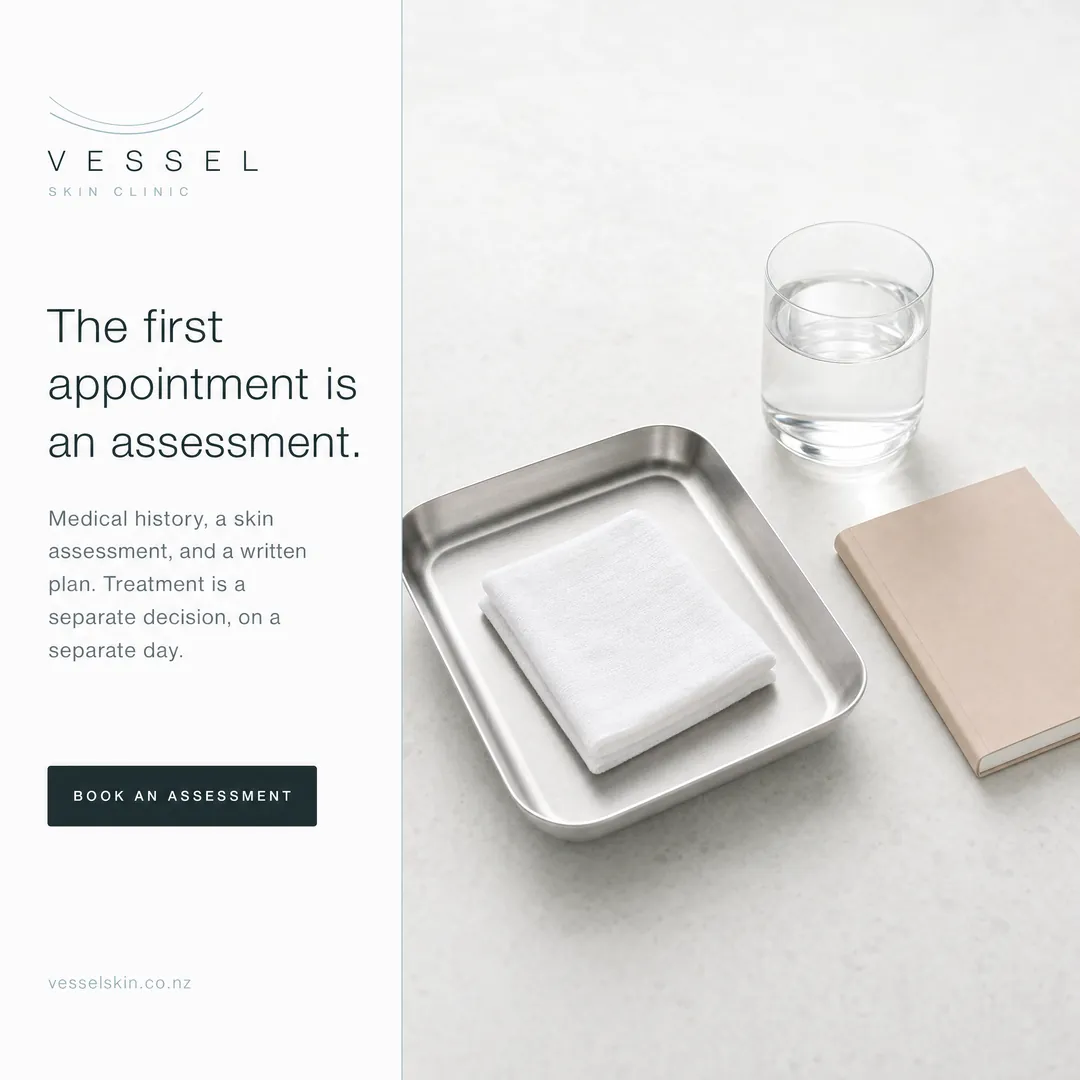
M-01Concept
Vessel Skin Clinic
The first appointment is an assessment
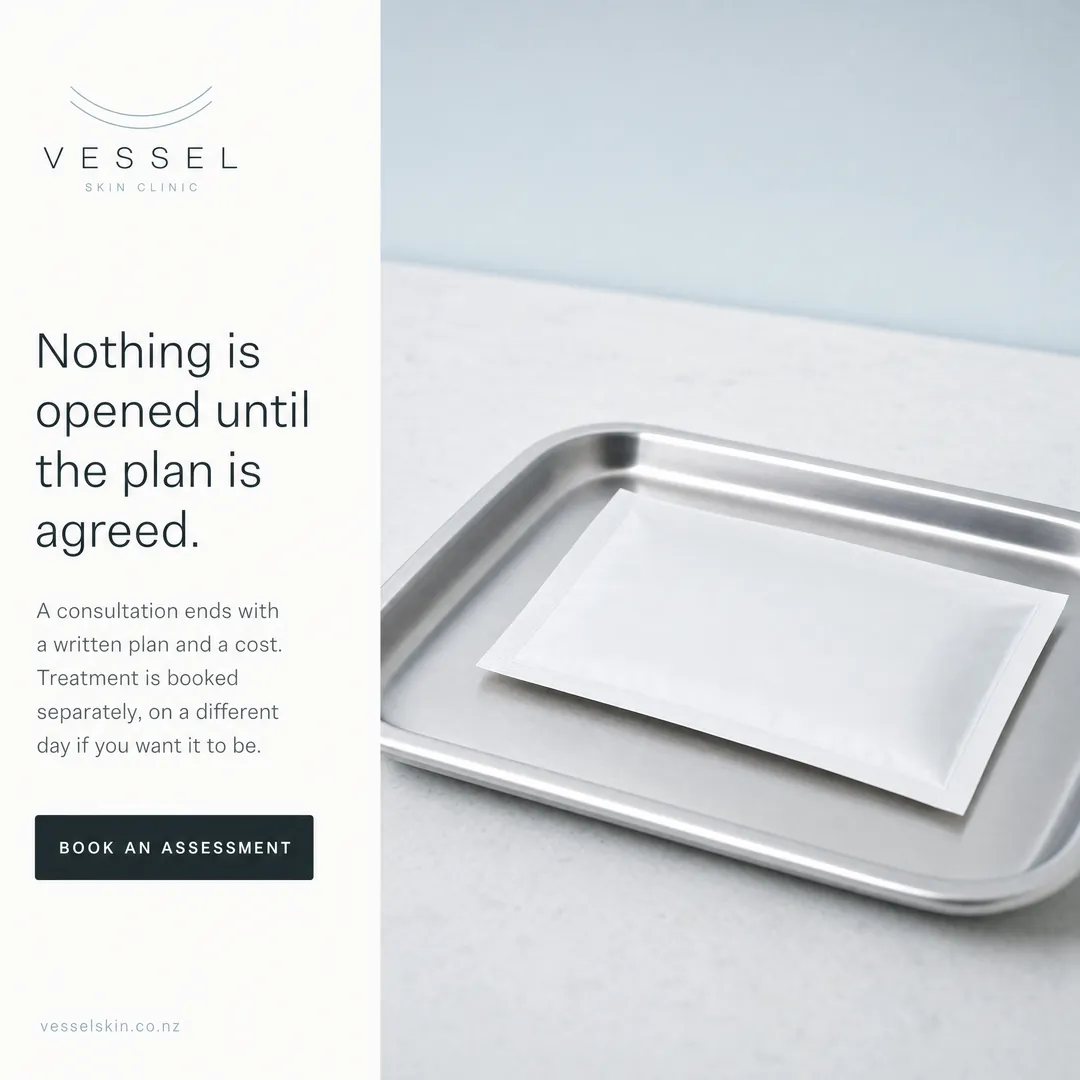
M-03Concept
Vessel Skin Clinic
Nothing opened until the plan is agreed
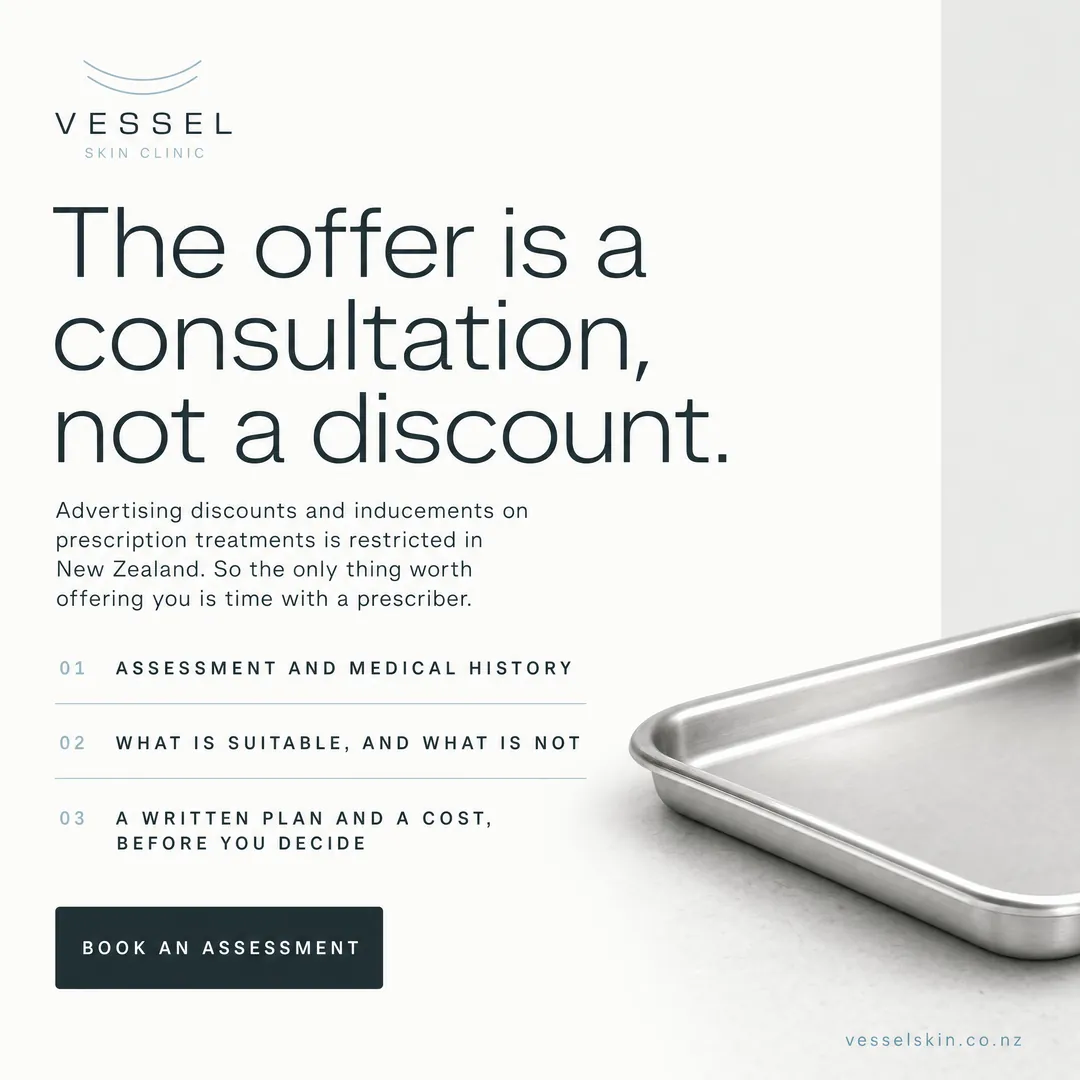
M-04Concept
Vessel Skin Clinic
A consultation, not a discount
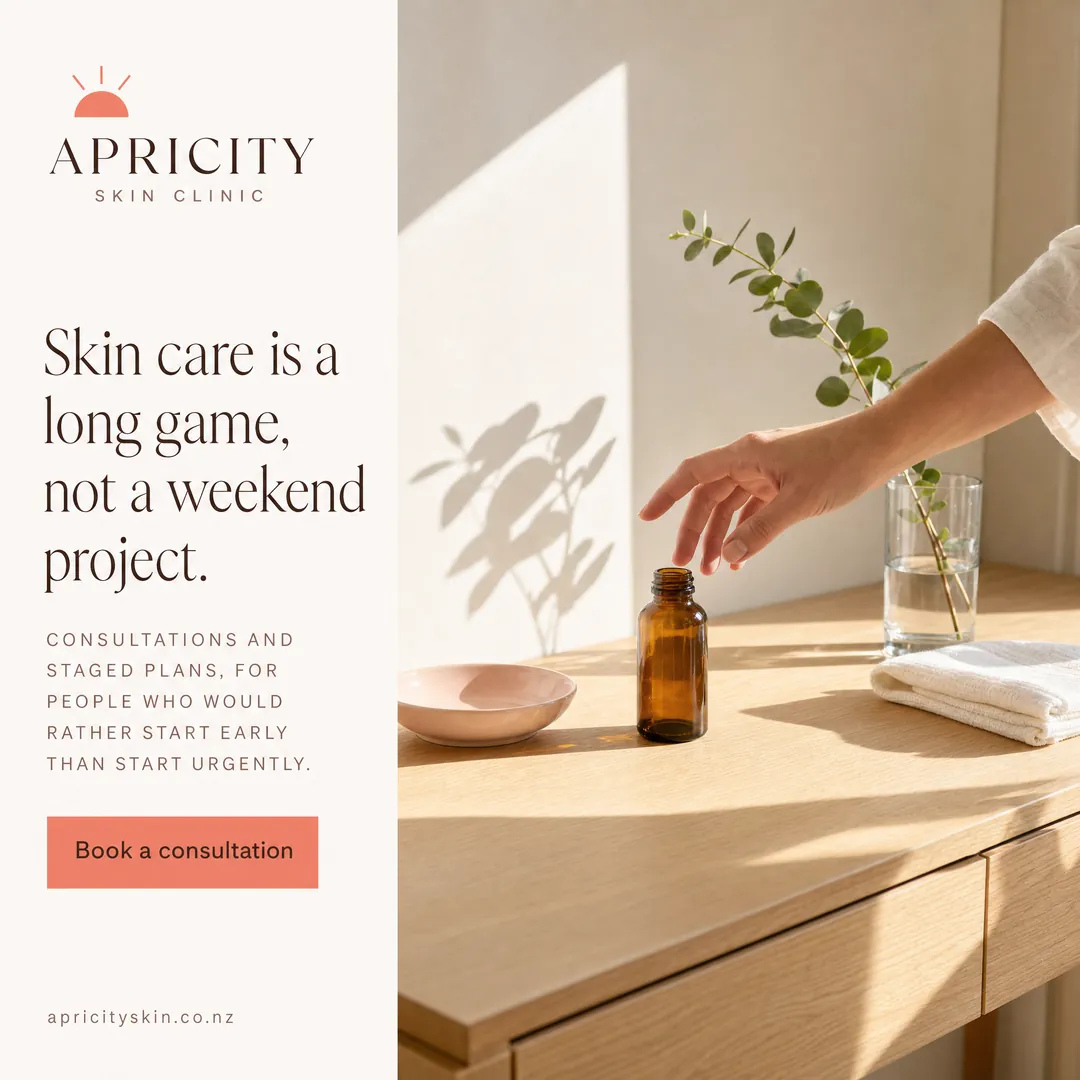
M-05Concept
Apricity Skin Clinic
Staged plans, not a weekend project

M-07Concept
Apricity Skin Clinic
A plan is allowed to stop short of an injectable
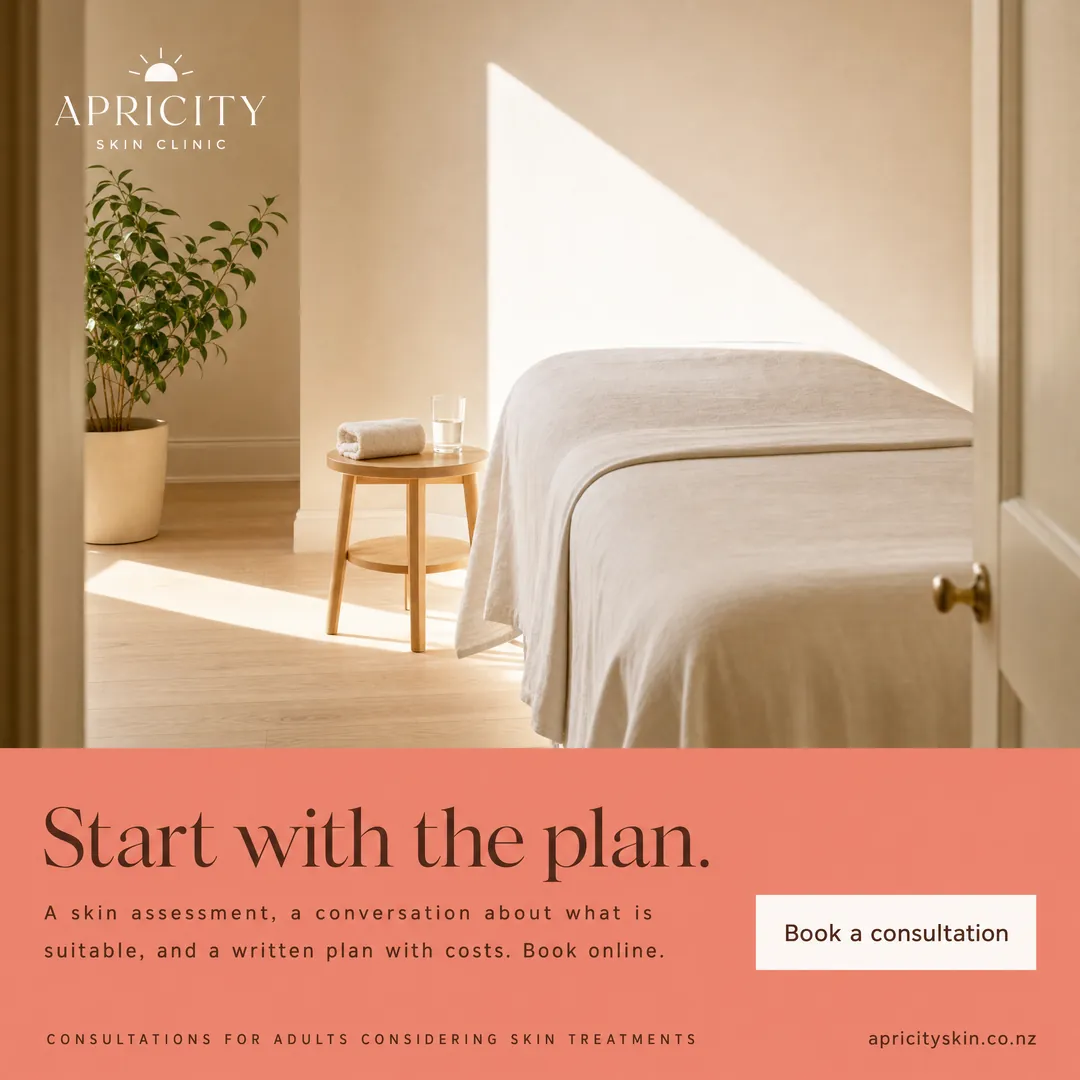
M-08Concept
Apricity Skin Clinic
Start with the plan
Held back
12 flagged
The narrowest brief, working as designed. A price on a prescription treatment, a free consult, a result: where a prescription medicine is in frame, those are the first three things the rules take away. One here has nothing wrong with the artwork and is waiting on a check that has not been run. Another is one source file away from clearing.
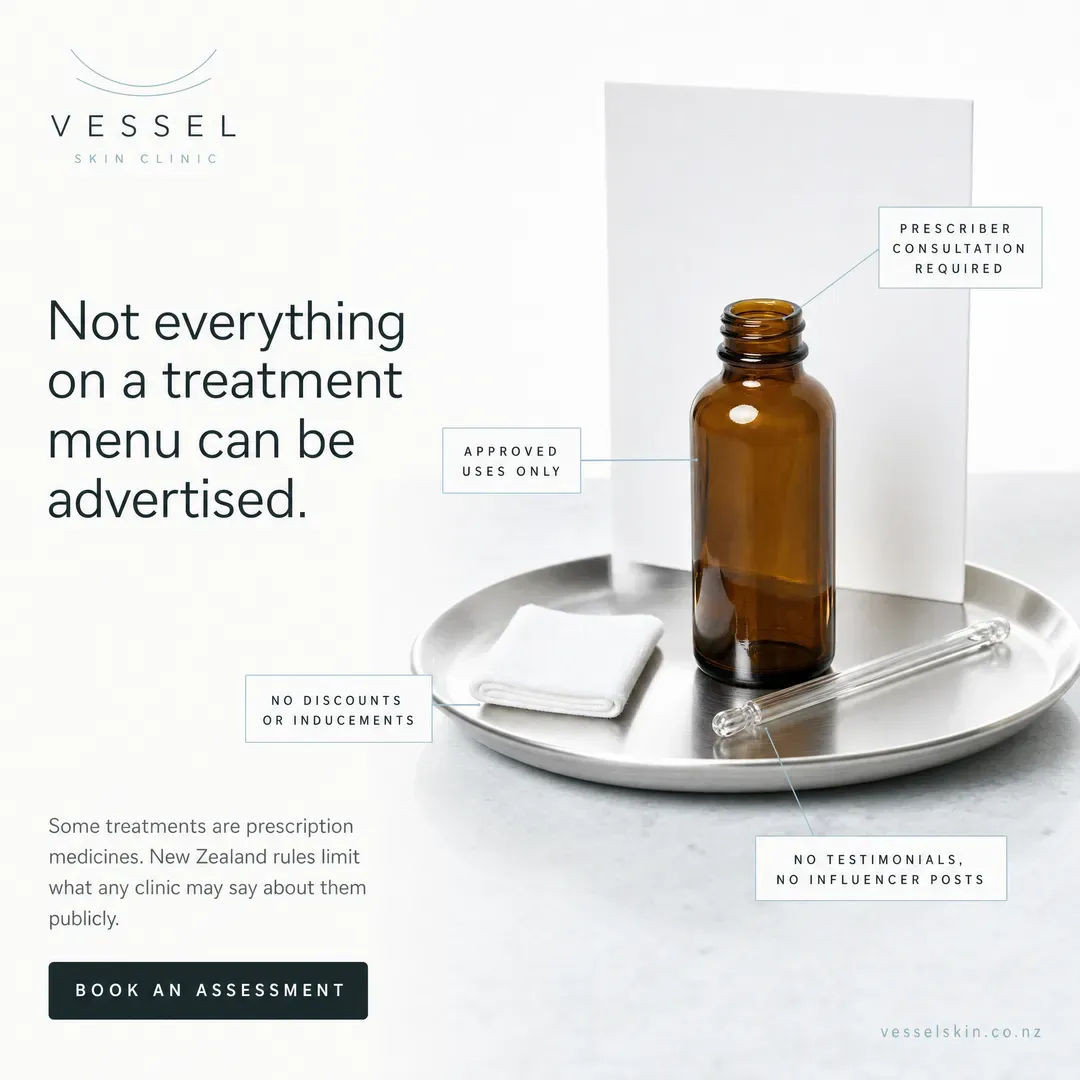
M-02Concept, held
Vessel Skin Clinic
- Gate not cleared
Describes the restrictions on advertising prescription medicines, accurately. Whether a public post that does that is itself caught by the direct-to-consumer definition is a question we have not answered, so it waits.

M-06Concept, held
Apricity Skin Clinic
- Gate not cleared
- Unsourced claim
The artwork and copy are otherwise clean. It carries four sun-care recommendations with no source attached, so it is held until the source page is filed with an access date. The cheapest of the set to recover.
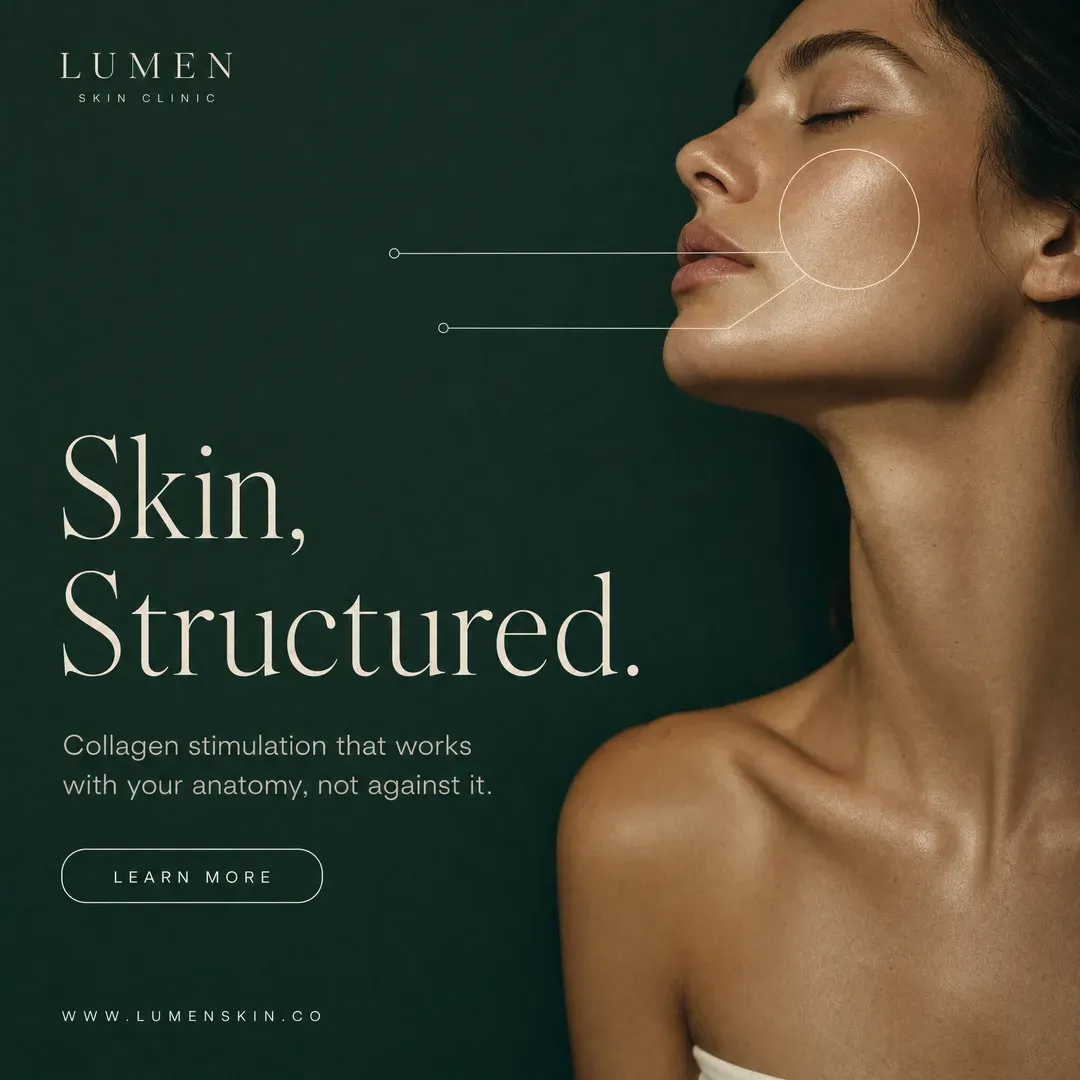
M-09Concept, held
Lumen Skin Clinic
- Personal attributes
- Unsourced claim
Speaks to the reader about their own skin, then makes claims about a prescription treatment with nothing cited behind them.
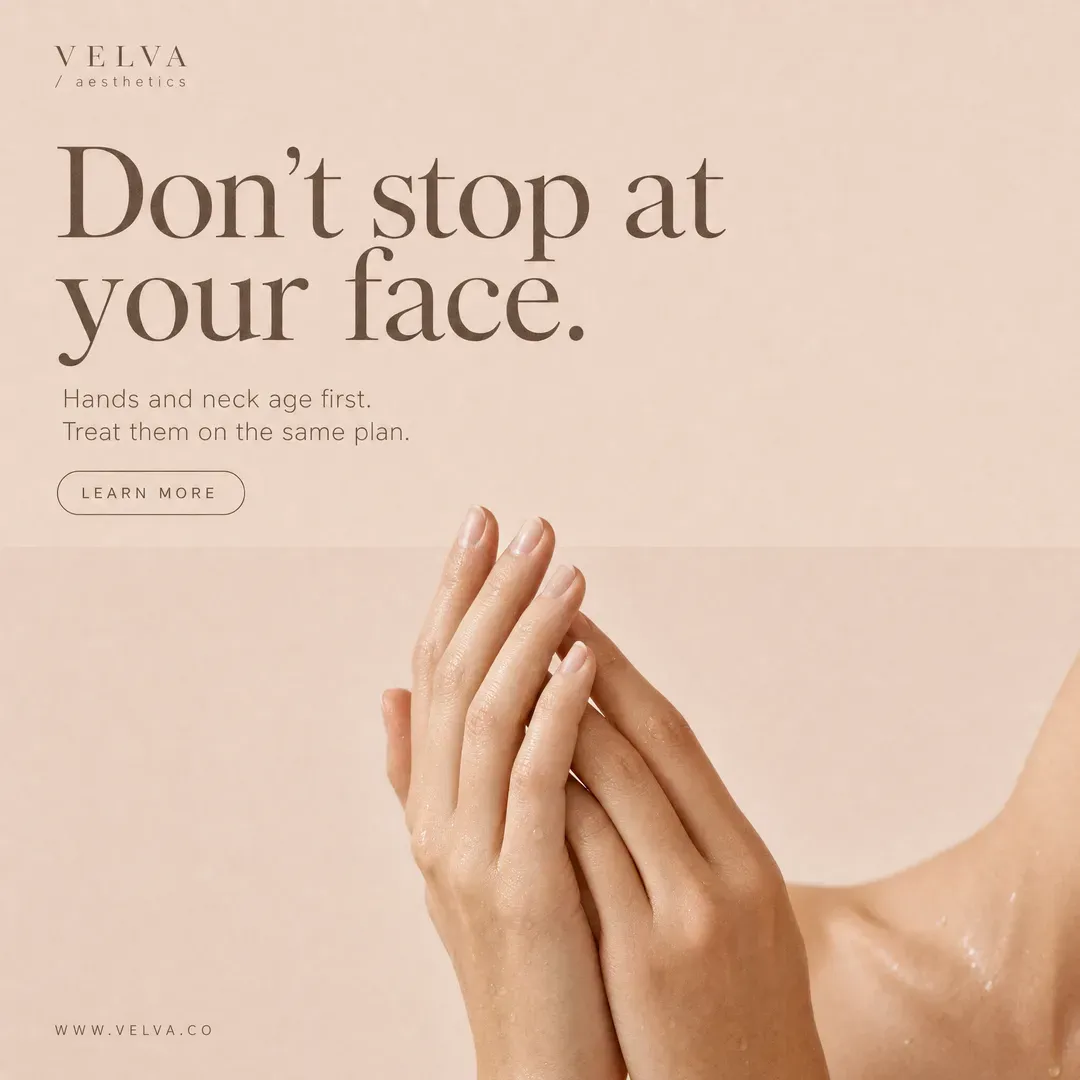
M-10Concept, held
Velva Aesthetics
- Personal attributes
Addresses the reader about their own appearance. Everything else about it is fine, which is what makes the rule worth knowing.

M-11Concept, held
Lumen Skin Clinic
- Outcome claim
- Idealised body
- Unsourced claim
A bare result set as the largest element on the artboard, an unsubstantiated quality claim under it, and a retouched face carrying both. Not repairable by a copy edit.
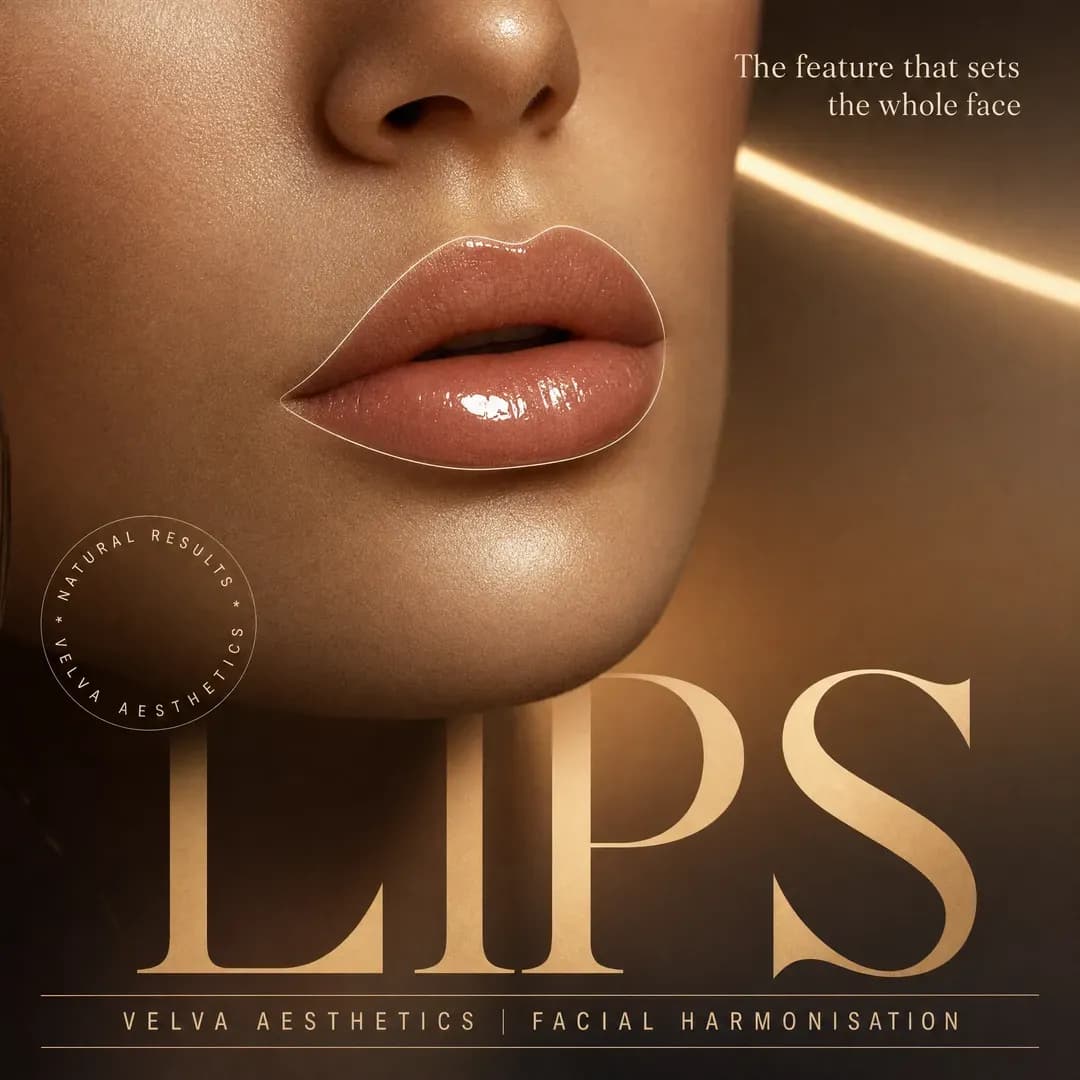
M-12Concept, held
Velva Aesthetics
- Outcome claim
- Idealised body
Leads with a phrase this project banned by name in its own prompt file, over augmented lips with an outline traced around them.
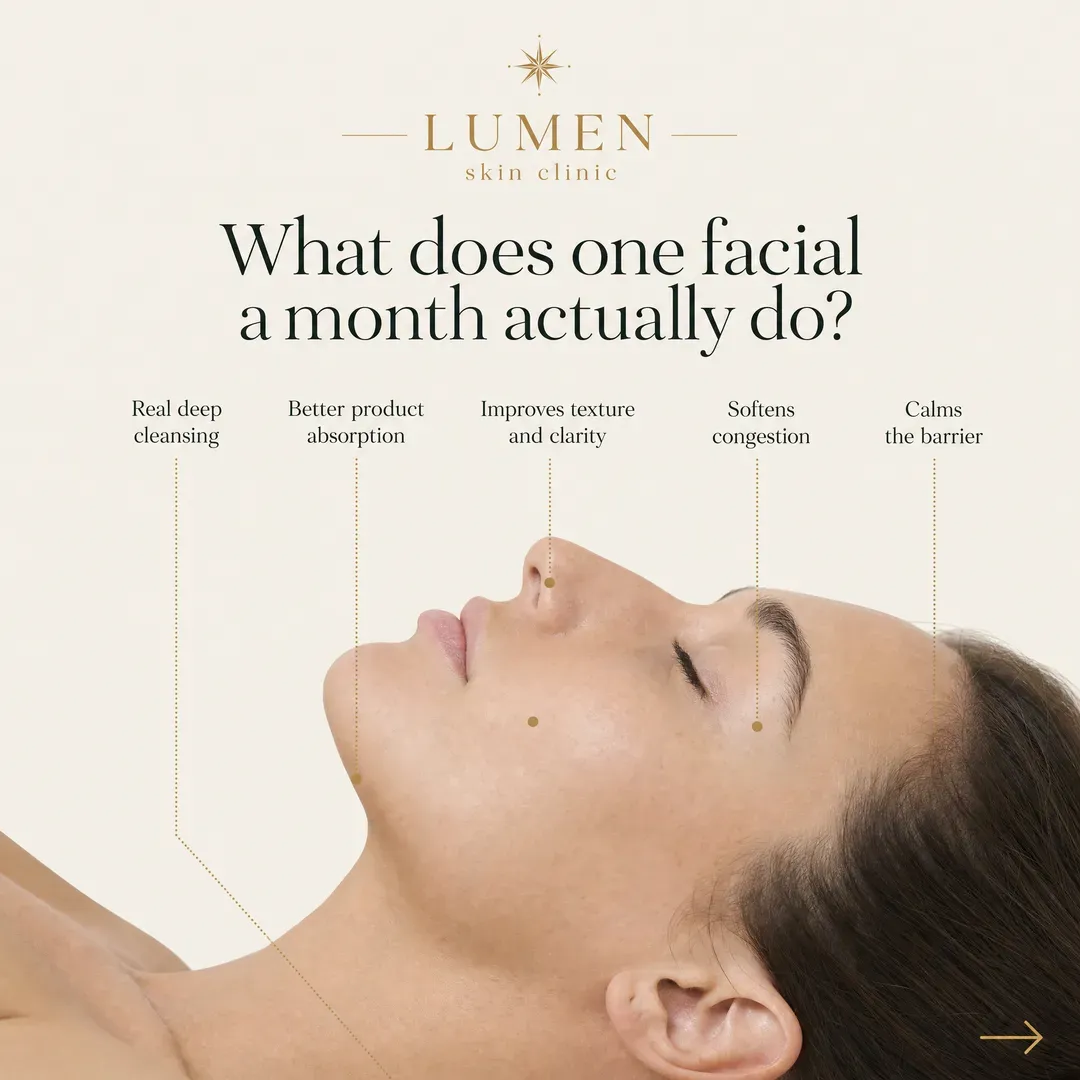
M-13Concept, held
Lumen Skin Clinic
- Personal attributes
- Unsourced claim
Five benefit claims on leader lines dropped onto a photographed face, none of them sourced, all of them addressed to the reader's own skin.
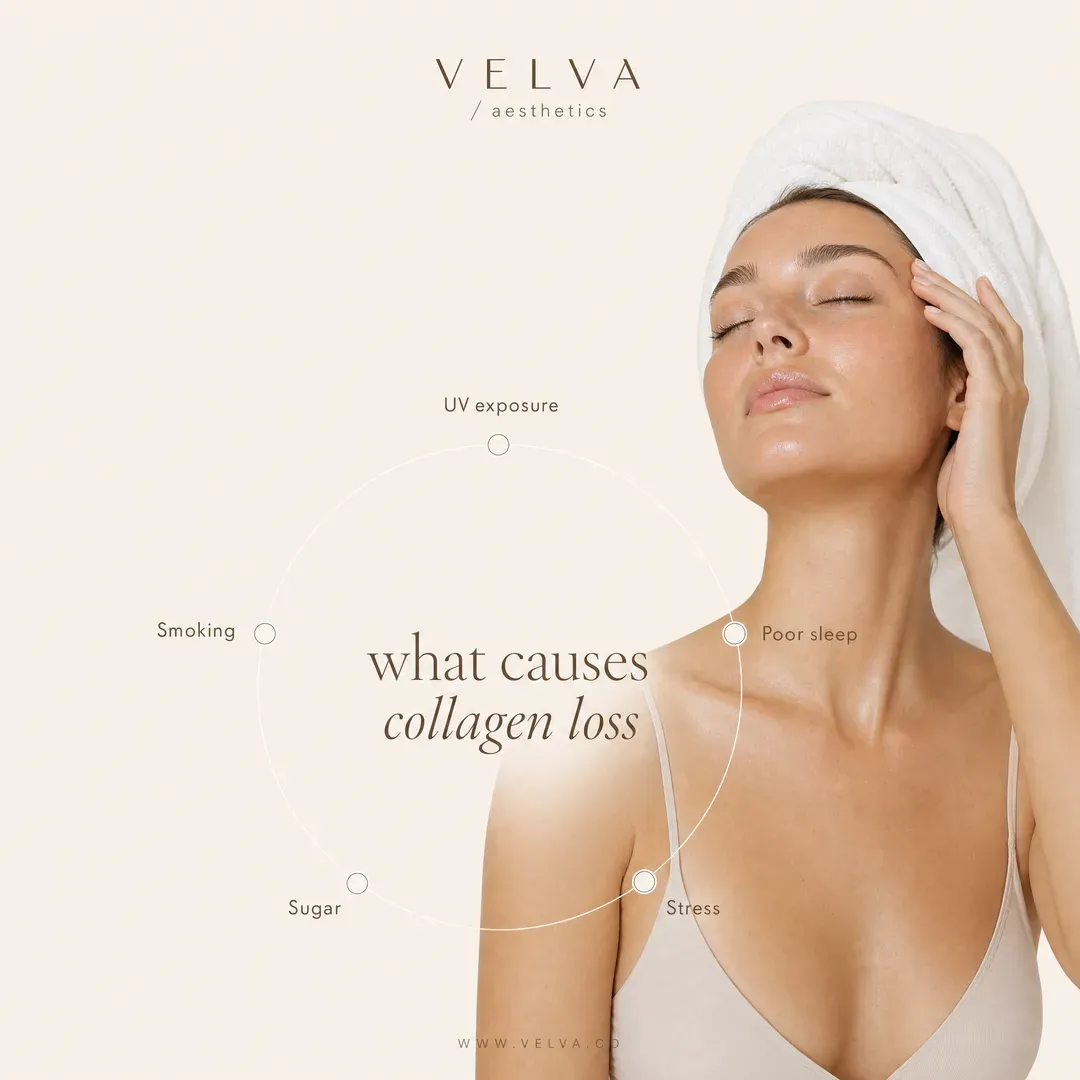
M-14Concept, held
Velva Aesthetics
- Unsourced claim
- Idealised body
Six causal claims arranged as a diagram, which makes them look researched. None of them are cited.
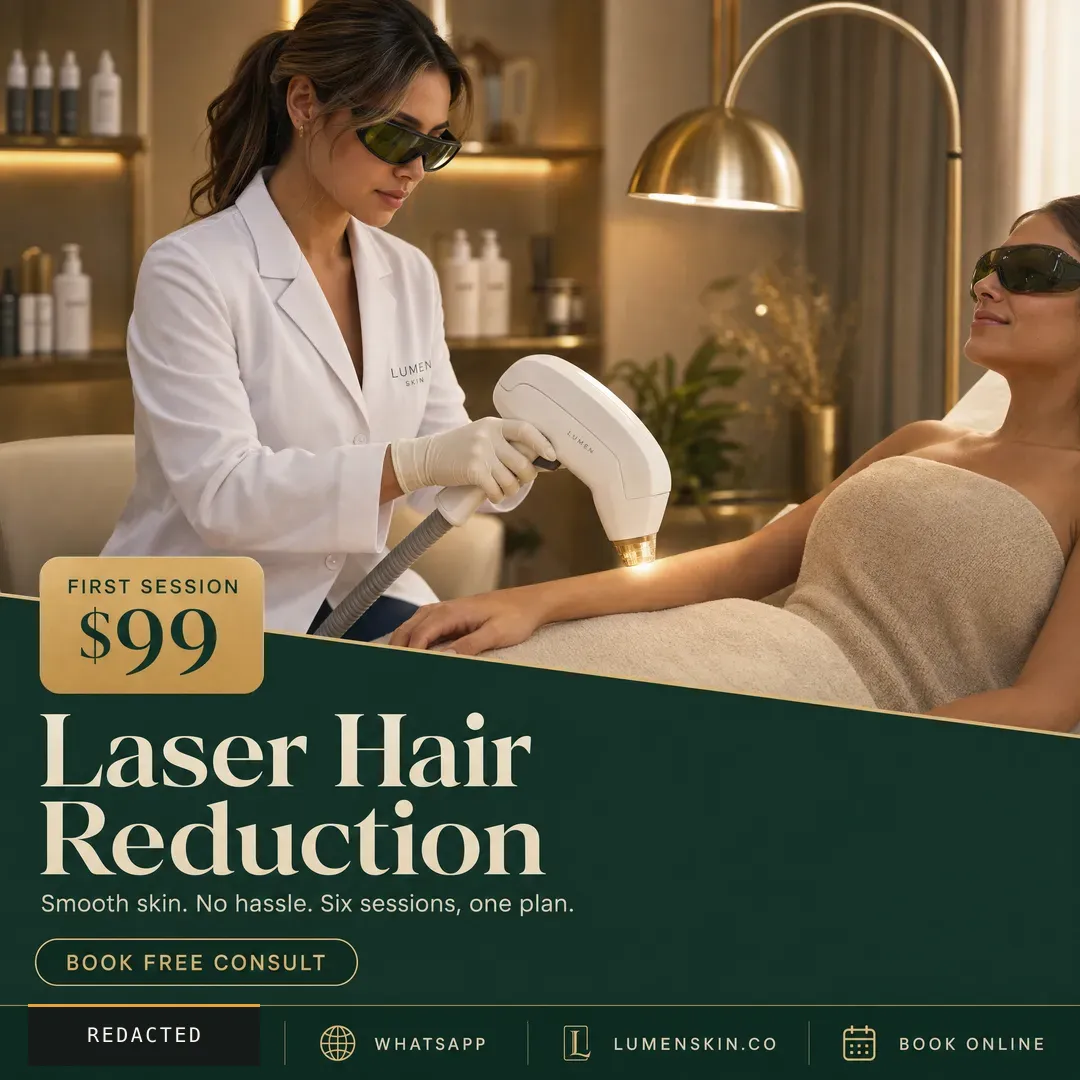
M-15Concept, held
Lumen Skin Clinic
- Location rendered
- Inducement
- Outcome claim
- Unsourced claim
Worst in set. A fabricated phone number in the footer, blocked out here, plus a first-session price, a free consult, a promise about the result and a treatment shown in progress.
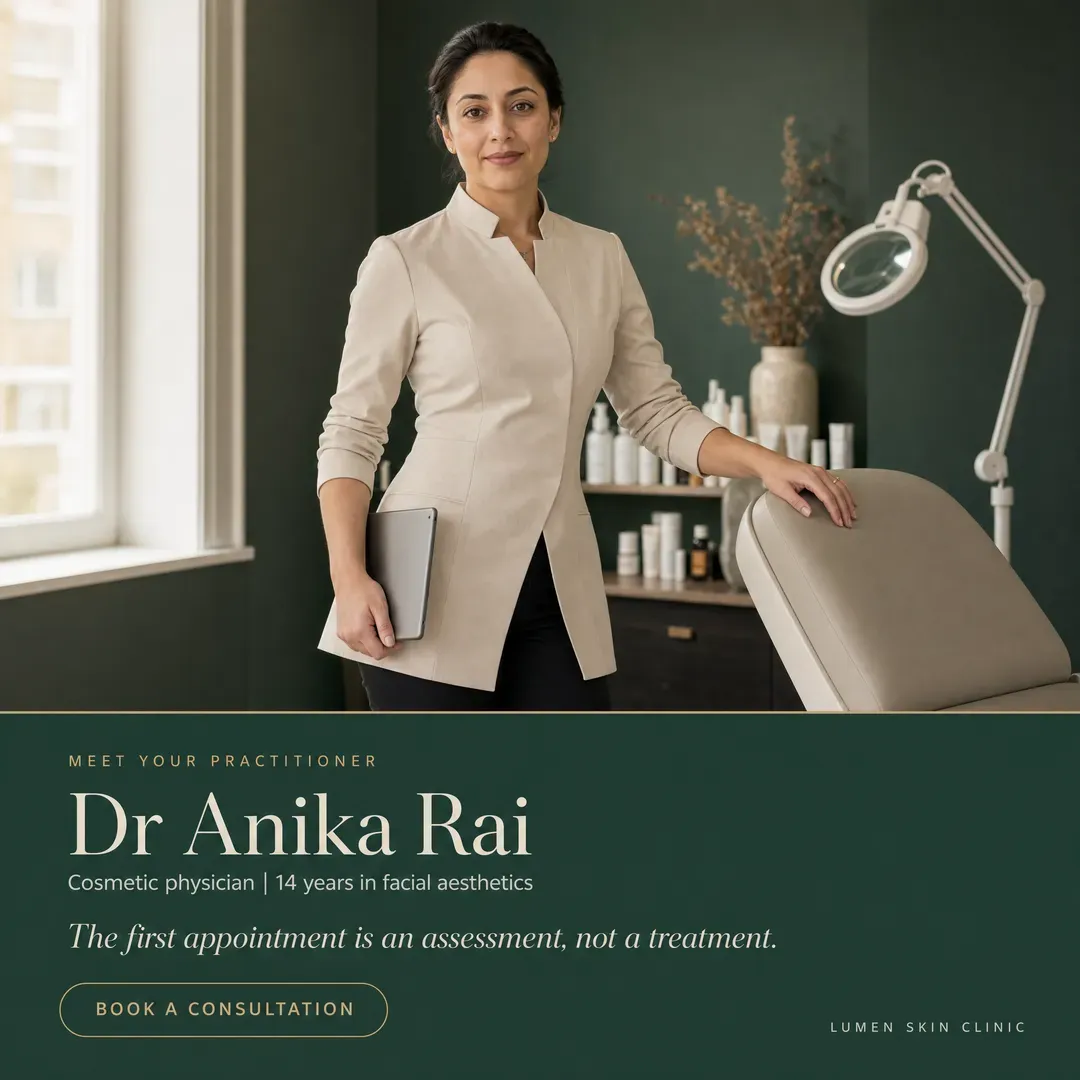
M-16Concept, held
Lumen Skin Clinic
- Protected title
- Synthetic person
- Invented figure
A title that implies a vocational registration New Zealand does not have, a years-of-experience figure from nowhere, and a generated person presented as a named, credentialled doctor.

M-17Concept, held
Velva Aesthetics
- Protected title
- Synthetic person
Copy clean, imagery clean, layout the best of the four. It fails on identity alone: a title reserved under the HPCA Act, worn by a person who does not exist. The closest of the set to salvageable.
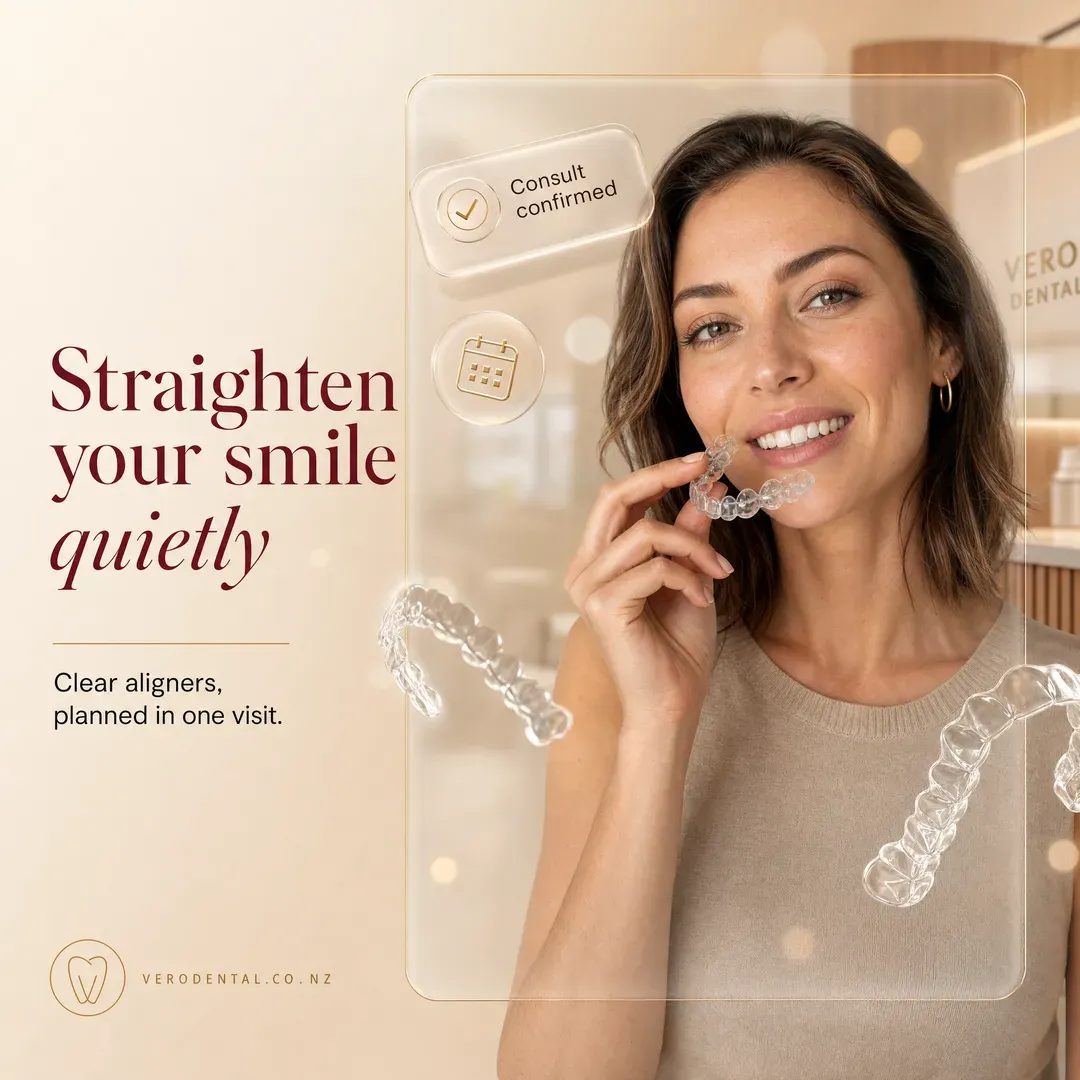
M-18Concept, held
Vero Dental
- Personal attributes
- Outcome claim
- Craft defect
A dental aligner ad that the generator filed into the medical aesthetics batch, which is the craft defect. It also asks the reader about their own teeth and answers with the finished result.
The pattern
The rules delete the easy ad, not the good one.
Everything that cleared is about a process. What an assessment covers, what the written plan says, what happens before anything is treated. What did not clear splits in roughly equal measure between two things: a claim about the reader's body or what the care will do to it, and a claim with no source under it, which is the single most common finding in the set. That is not a coincidence and it is not a house style, it is what we are left with once the claims we cannot substantiate come out. Here is what actually stopped the rest, counted off the tiles above.
Unsourced claim22
A statement of fact with nothing behind it. The ASA codes put substantiation on the advertiser, before the ad runs, not after a complaint.
Outcome claim9
Tells the reader what the care will do for them. The Chiropractic Board standard bars guaranteed, promised or glamorised outcomes. The Dental Council standard bars advertising that creates unrealistic expectations and requires every claim to be verifiable. In medical aesthetics the ASA Therapeutic and Health Advertising Code covers the same ground.
Personal attributes8
Addresses the reader about their own body or condition. Meta's personal attributes policy bars an ad that asserts or implies it knows something about the reader's health. Do you have sciatica? fails. Chiropractic care for people with sciatica does not.
Idealised body7
Uses a body or a face as the proof. Meta's health and wellness rules restrict idealised body imagery and before-and-after style results, and it is a poor fit for a clinic in any case.
Invented figure6
A number no one can source. Session counts, minutes, years of experience, founding dates and prices all count.
Location rendered5
A suburb, a city or a phone number painted into the artwork. Publishing an address for a clinic that does not exist is a misrepresentation, and a fabricated New Zealand phone number belongs to somebody. The block stays on.
Craft defect5
The generator got the drawing wrong. Anatomy that does not line up, a leader line pointing at nothing, a wordmark that changes between pieces.
Diagnosis in an ad4
Marks a symptom onto a body in the artwork. An ad that identifies what is wrong with the reader has done something only an assessment can do.
Red flag symptom3
Names a symptom that can indicate something serious and offers a single answer to it, with no line telling the reader to get it assessed.
Synthetic person3
An AI-generated person presented as a real practitioner or a real patient, inside artwork styled as documentary photography.
Outside scope3
Advertises something the profession's scope of practice does not cover.
Protected title2
Uses a title reserved under the Health Practitioners Competence Assurance Act 2003, on a person who does not exist.
Inducement2
A free consultation, a discount or a first-session price. The chiropractic standard allows an introductory offer only on stated conditions, and the prescription-medicine rules do not allow one at all.
Gate not cleared2
The piece is not held for what it says. It is waiting on a check that has not been run yet.
Trade mark1
A real third party's mark rendered into the image. Blocked out in the file, held on the page.
Unsafe advice1
Encourages the reader to push through something they should be getting looked at.

The free Ad Check
Two written pages on your clinic's advertising. Free.
Your ads, site and Google profile wording, reviewed against your profession's advertising rules, the ASA Therapeutic and Health Advertising Code and the Fair Trading Act. In your inbox within two NZ business days. No call, no follow-up sequence, no obligation.
Free · Async · Two NZ business days